
Pavel Polovinka,
Head of Publishing, Playgama
Xiaomi is the third-largest smartphone vendor in the world, producing a wide range of hardware — including electric vehicles and AI-powered robot vacuums — that goes far beyond phones and its own Android-based HyperOS operating system.
However, it is not widely known that you can distribute and monetize your web games within this ecosystem, and few developers are aware of how to do this. Xiaomi does have its own app and game store, which mobile developers should definitely consider as an alternative distribution channel for their mobile titles. But what we were really curious about was how their Xiaomi Game Center app works – it comes pre-installed on all Xiaomi phones and other sub-brands like Redmi.
Today we’ll explore all the basics of distributing and publishing web games to Xiaomi Game Center and share results after testing 600+ games to give you a hint at which titles are best suited for this platform and what you can expect in terms of revenue.
Important clarification: we’ll cover how to publish your games to the global audience of Xiaomi Game Center, excluding China. To release games in the Chinese market, you must obtain a special license — this process is much more complex and deserves a separate article.
Why Xiaomi ecosystem is worth paying attention to
- 100 million monthly average users.
In 2026, Xiaomi devices are spread among approximately 700 million people on the planet, around 42 million smartphones are sold every year, and the audience of Xiaomi’s Game Center is around 100 million MAU. - Above-average total eCPMs.
Revenue for every 1,000 ad impressions displayed to players on average is about $3, and in some cases can even reach $10. - Responsive audience with a preference for hypercasual titles.
Players eagerly try out new games on the platform, and playtime can easily exceed 10 minutes. Games that resonate with the audience attract 10,000 – 30,000 daily players. Xiaomi’s user base prefers hypercasual titles with straightforward gameplay that don’t require much involvement. Favorite genres: Puzzle, Car Simulation, Action, and Board.
Which games perform best on Xiaomi Game Center?
We spent several months testing over 600 web games on Xiaomi’s platform, and can now share our results:
- Which web games and genres perform best on the platform.
- What kind of revenue stream can a web game developer expect from Xiaomi Game Center.
Games
During our tests, we found out that puzzle, car simulation, and racing genres outperform all the rest in terms of revenue and daily audience. Right now, that’s what players are most attracted to, and titles that resonate with the audience gather 10,000 – 20,000 daily users.
The top 10% of web games on such type of platforms can earn $1000–$3000 a month, which is possible with 10-20,000 DAU.
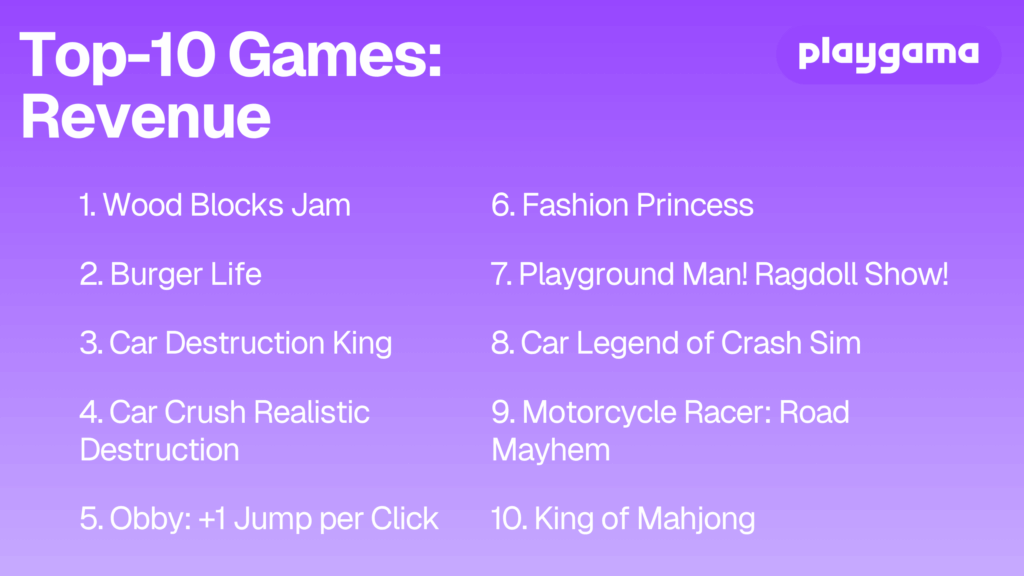
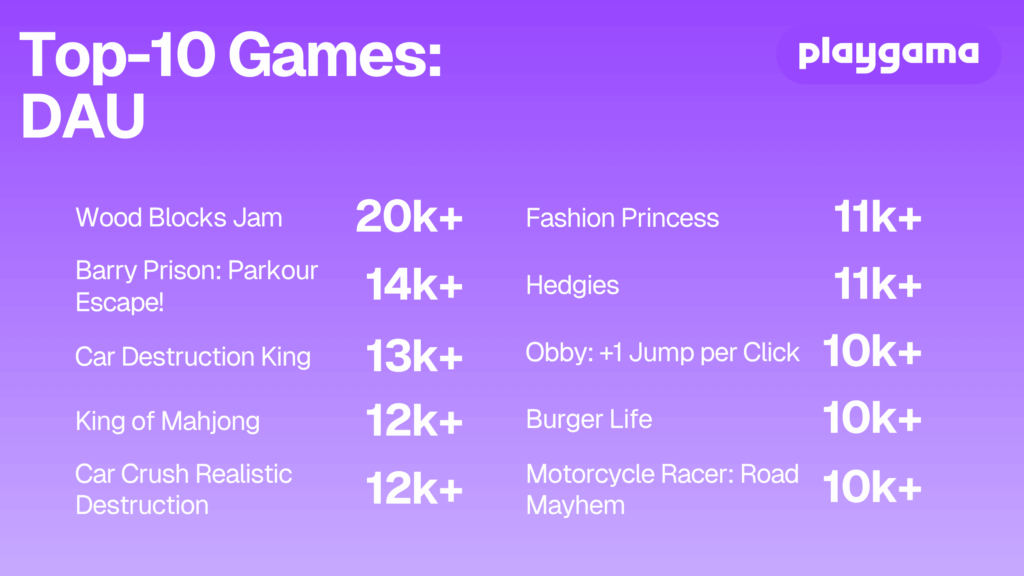
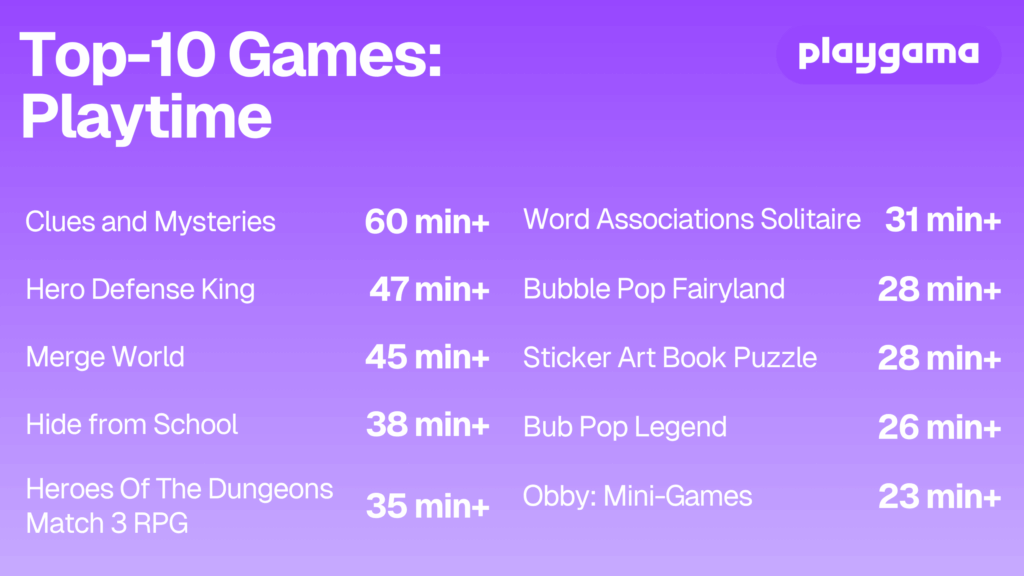
Only a small percentage of web game developers distribute their projects on Xiaomi Game Center, although after testing 600+ web titles on the platform, we can conclude that the metrics we’re seeing — revenue opportunity and sheer audience engagement — outperform most of the web game portals. Xiaomi truly has a large and active audience that responds well to hypercasual titles.
How web game developers can publish to Xiaomi’s ecosystem
Xiaomi has pretty standard requirements for web games.
The game should:
- Load in under 15 seconds.
- Support Android platform.
- Have a size that does not exceed 100 MB.
There are several ways for developers to distribute their games on the Xiaomi platform:
Xiaomi’s Official Developer Portal
Right now, there is no open and publicly available way to submit games to Xiaomi Game Center. Work between the developer or publisher and Xiaomi begins through direct contact with the Business Development department.
You will need an officially registered company in order to do that. During the process, Xiaomi will request a company’s business license or registration certificate.
After that, you will receive an entry point to upload and submit your web games.
This route requires more hands-on work and negotiation from the developer, but you’ll be able to publish games directly to the Xiaomi ecosystem.
Playgama
Playgama is an open distribution platform that has a direct partnership with Xiaomi. Developers can publish their games through Playgama on Xiaomi Game Center even if they don’t have the official company.
How does it work?
You sign up, integrate the lightweight Playgama Bridge SDK to your game, go through a process of screening with our built-in QA and optimization tools, and can publish it to all supported platforms, including Xiaomi, without the need to manually add it to each one. The full list and integration process are described on Playgama Wiki.
Every developer has access to the dashboard with detailed gameplay analytics and a breakdown of revenue on the Playgama’s website, and can withdraw funds directly from the personal account.
Playgama’s compensation rates are based on the monthly Net Revenue from in-game ads and purchases:
Up to 1,000 USD: 70% of the Net Revenue.
From 1,000 USD to 3,000 USD: 700 USD plus 80% of the portion of Net Revenue that exceeds 1,000 USD.
Over 3,000 USD: 2,300 USD plus 90% of the portion of Net Revenue that exceeds 3,000 USD.
Other distributors
There are other distributors that have direct partnerships with Xiaomi as one of the OEM channels, but it would be beyond the scope of this article to list them all.
The main point is that they all divide into publishers, open distribution platforms, and gaming portals, which sometimes also have a network of partners. Or something in-between of all three categories.
Open distribution platforms tend to give you more control over the choice of platforms and reach, acting as a PaaS (platform-as-a-service), while publishers take charge of this process and handle monetization on their own, also being more selective and taking a more personal approach to each game.
Monetization opportunities on Xiaomi Game Center
For now, there isn’t much direct control over the monetization of web games uploaded to Xiaomi Game Center. The platform operates based on its own algorithms and auto-determines which games to promote within. If a game generates significant interest among the audience, Xiaomi features it in various ways. All of this is fairly standard.
To get additional internal traffic and promotion, it’s recommended to upload many games. If a developer or a publisher has many titles that perform well, Xiaomi is more likely to highlight them for other players.
In the near future, in-app purchases will be added. For more information, read the article on Playgama Wiki that delves deeper into how to place ads in a game, and has our general tips on monetization.
A competitive platform for web game developers
For web game developers who already host their games on Discord, YouTube, Poki, and Crazy Games, the Xiaomi Game Center could be just as significant — or perhaps even a greater — source of revenue and audience.
Wrapping up, it’s fair to say that Xiaomi Game Center is a great place for web game developers to:
- Reach a massive audience of 100 millions monthly players.
- Get an alternative discovery channel beyond saturated portals for web games.
- Try out a platform where games that are particularly appealing to the audience attract 10,000–20,000 daily players and earn $1,000 – $3,000 a month.
Today’s web gaming market is a fragmented landscape of platforms and ecosystems and web developers must deploy their games across all spaces to maximize player base and revenue. Xiaomi Game Center is a great addition to this list.