Who this is for: These Math Games are perfect for students looking to sharpen their skills, educators seeking engaging teaching tools, and gamers who appreciate a fun challenge. Whether you’re a math enthusiast or a casual player, these games offer a dynamic range of puzzles and problem-solving adventures tailored to various skill levels.
Math games have emerged as the unexpected champions of 2025’s gaming landscape, proving that educational entertainment can be both addictive and profitable. From number-crunching adventures to puzzle-solving marathons, these titles are redefining how players engage with mathematics while delivering the instant gratification that modern gamers crave. The fusion of learning and entertainment has created a new genre that’s capturing millions of players worldwide.
Nullify – Merge Math
Nullify – Merge Math is a minimal, abstract, relaxing puzzle where the goal is to clear everything from the screen by merging numbers and math symbols. The design keeps things stripped back and calm, letting the logic take center stage. Completing levels sharpens both logic and math skills, and the game supports that with two distinct content tracks: 56 unique handcrafted levels and an endless supply of generated levels across four infinite game modes.
How to play: Every level starts with a screen filled with numbers and math symbols. The objective is to merge them together until nothing remains. Selecting a piece and dragging it onto a compatible symbol triggers a merge, and working through all the elements clears the level. Both the handcrafted levels and the infinite generated levels follow this same core loop.
- Click and drag: Move symbols and merge them to clear the screen
Math Crosswords
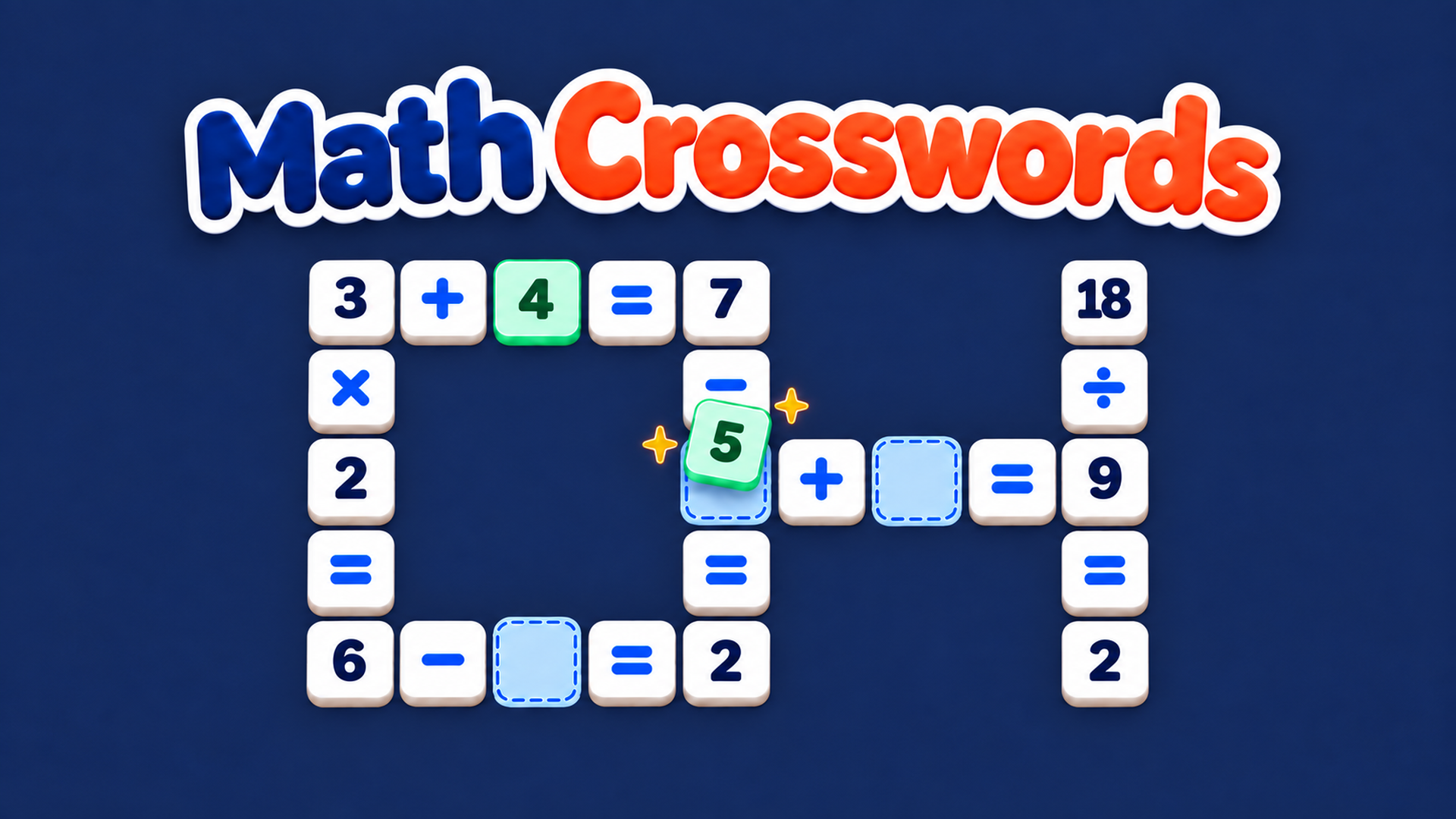
Math Crosswords replaces words with numbers, turning the familiar crossword format into an arithmetic puzzle. Equations run across and down the grid, crossing each other so that a single cell must satisfy two equations simultaneously. Get that shared number right and both equations light up green. The game covers addition, subtraction, multiplication, and division across a large collection of levels, starting with simple sums and scaling up to larger grids as difficulty increases gradually. Every level has exactly one solution. Light and dark themes are available to suit your preference.
How to play: Numbers sit in a panel beside the board, and the board holds equations with empty cells waiting to be filled. Drag a number directly into an empty cell, or select the number first and then tap the target cell. To remove a number already placed, tap the filled cell and it returns to the panel. A completed equation turns green when correct and red when wrong. The level is cleared once every equation on the board shows green.
How to play: A light bulb hint places one correct number when progress stalls. Finishing fast and without using hints earns the highest score. The best starting point is any cell where two equations intersect — those crossing cells have the fewest possible values that can satisfy both equations at once.
- Mouse: Drag numbers onto cells or click a number then click a cell; click a filled cell to return its number
- Touch: Drag numbers onto cells or tap a number then tap a cell; tap a filled cell to return its number
Merge 13
Merge 13 combines the addictive merge mechanic with strategic number placement, challenging players to reach the elusive number 13 through careful planning. The game’s minimalist design belies its complex strategic depth, requiring players to think several moves ahead. Each merge creates a satisfying cascade effect that triggers the brain’s reward centers.
The game’s elegant simplicity has made it a favorite among puzzle enthusiasts and casual players alike. Its low development costs and high retention rates have established it as a template for successful indie puzzle games.
Master of Numbers
Master of Numbers presents a comprehensive mathematical training ground where players tackle everything from basic arithmetic to complex equations. The game’s adaptive difficulty system ensures that challenges remain engaging without becoming overwhelming. Its clean interface and immediate feedback make even the most challenging problems feel approachable.
The game’s success in educational markets has opened new revenue streams through institutional licensing. Its data-driven approach to skill assessment has attracted attention from educational technology companies seeking acquisition opportunities.
Maths Puzzle
Maths Puzzle is a fun and engaging logic-based game that challenges mathematical skills and problem-solving abilities. The goal is to solve mathematical equations by figuring out missing numbers, symbols, or operations so that both sides of each equation balance. Puzzles range in difficulty and grow more complex as progress is made, making the game suitable for anyone looking to sharpen mental agility through an educational experience.
How to play: Each puzzle presents an equation with missing parts — numbers, operators, or both. Use knowledge of basic arithmetic, including addition, subtraction, multiplication, and division, to complete the equation correctly. As levels advance, equations become more complex and may contain multiple missing elements at once.
- Click: Select the puzzle to begin and interact with missing elements to fill in numbers or operators.
Jenny’s Math Puzzle
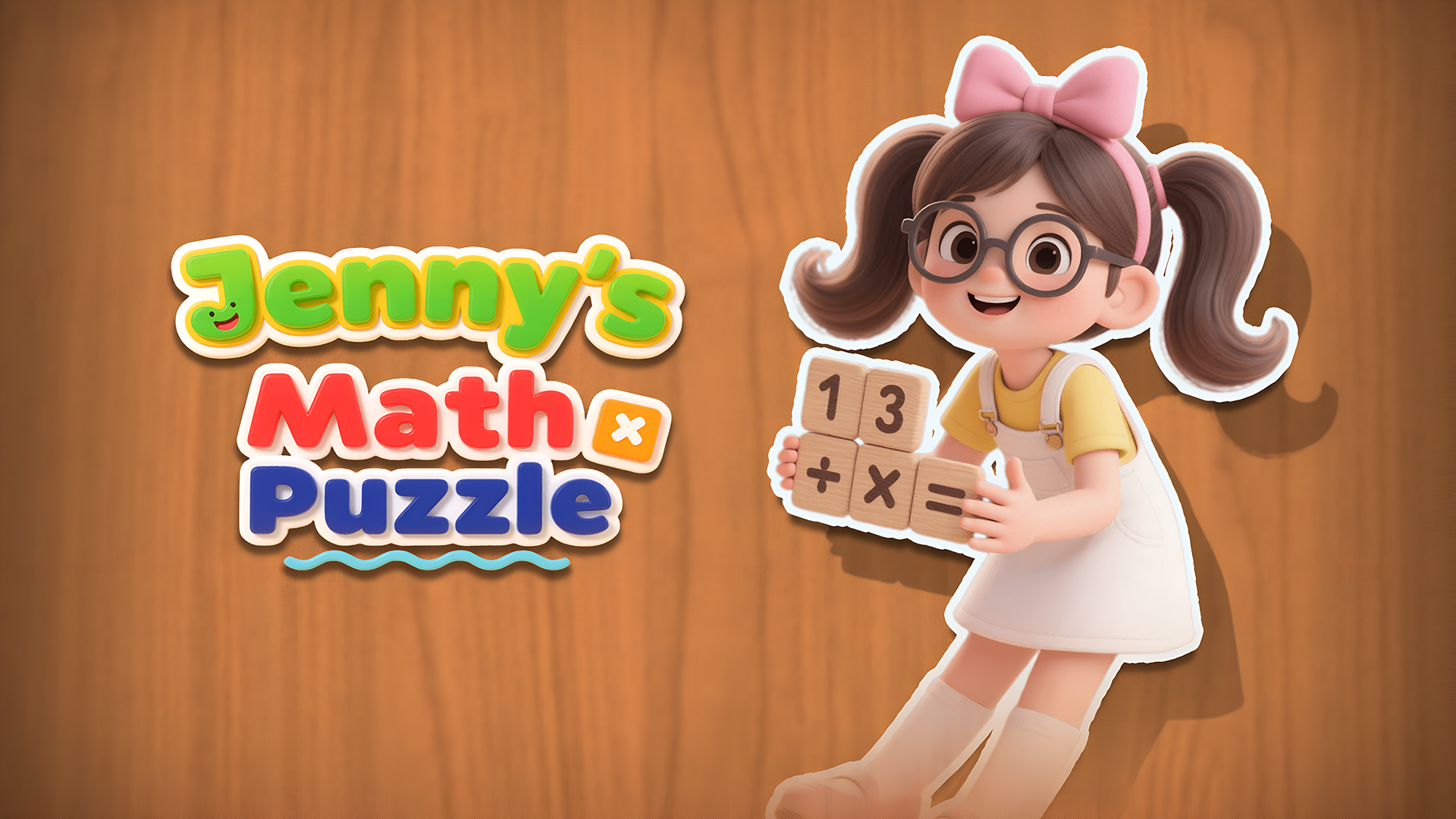
Jenny’s Math Puzzle is an educational puzzle game that combines math challenges with interactive gameplay. Number tiles sit in a pool beside a grid, and the goal is to place them so that every equation on the board holds true. The difficulty increases gradually, and the design keeps the experience mentally stimulating for players of all ages.
How to play: The objective is to complete every mathematical equation on the board by moving number tiles from the pool into the empty slots. Equations must be valid both horizontally and vertically. To win, fill the entire grid correctly with no mismatches. If a tile lands in the wrong place, drag it back to the pool and try again.
- Mouse drag and drop: Move number tiles from the pool to empty grid slots, or return them to the pool
- Touch drag and drop: Same tile placement and removal on mobile devices
Math is easy!
Math is easy! is a challenging math practice game from RandomGames that tests arithmetic instincts across a wide variety of expressions — from basic addition and subtraction to roots, degrees, fractions, and more. A global high score table lets you measure your results against other players.
How to play: Each screen presents examples in red text on the left column and answers in green text on the right. Press or tap to draw a connection between a matching example and its answer. Once every block on the screen has been paired, a self-test becomes available.
- Cursor or finger: press to connect an example with its correct answer
Pi Math
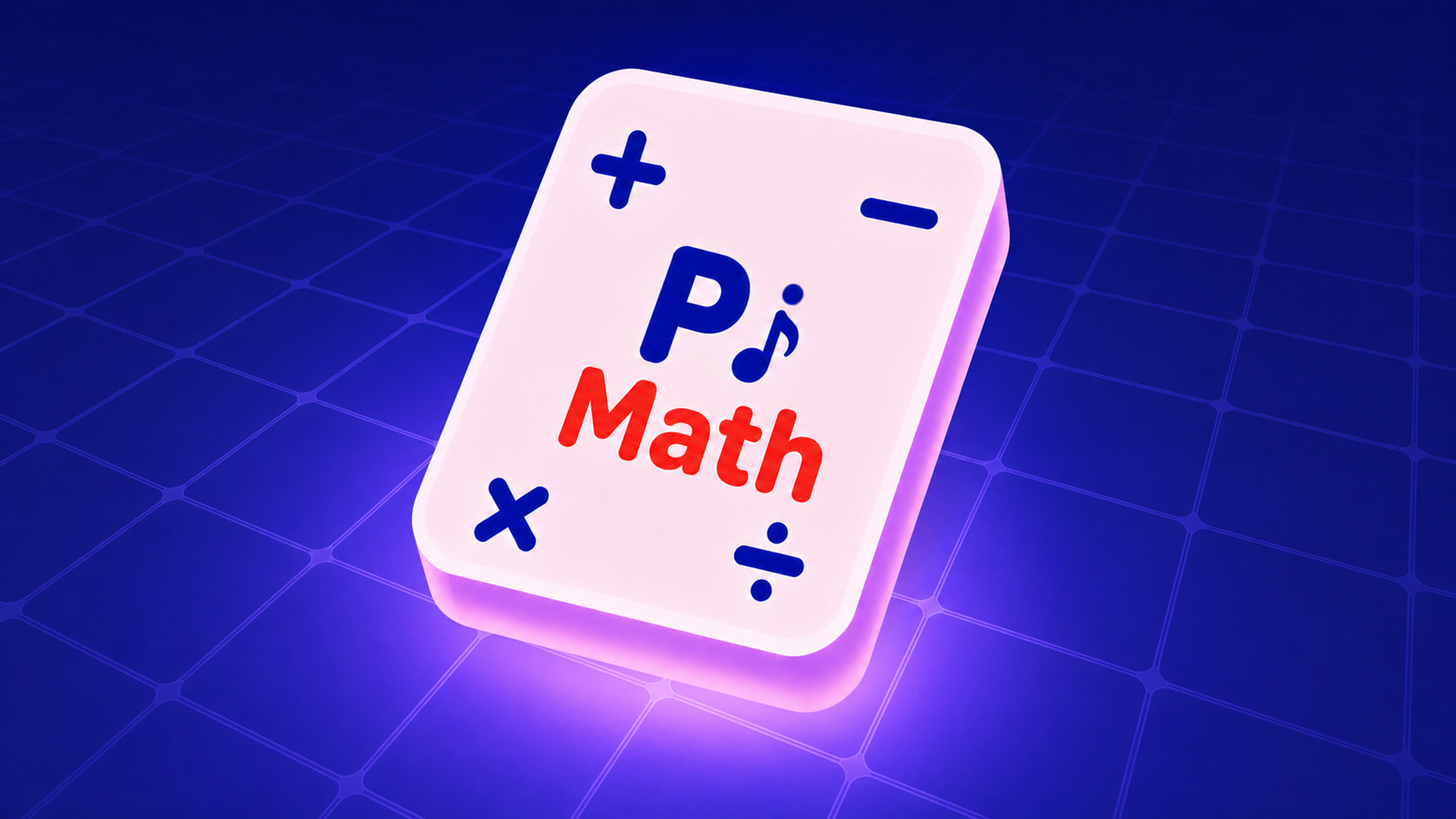
Pi Math is a fast-paced arithmetic arcade game where your brain and hands race together against a ticking clock. Simple addition problems arrive on glowing tiles, and the challenge is answering them quickly enough before each tile drops out of reach. The more you play, the faster you think — that’s the core promise, and the game delivers it through a combo system that rewards streaks and punishes hesitation. Four vertical white lanes divide the central play area across several scenes in the game.
How to play: A math problem appears on a glowing tile — something like 7+5 — and the task is to tap exactly as many times as the answer (12 taps in that example), then confirm with ENTER before the tile reaches the bottom. Get it right and the tile bursts, your combo grows, and your score multiplies. Get it wrong or run out of time and one of your three lives is lost. Building big combos earns lives back, so keeping a streak alive has real stakes.
- Keys 1–4: Tap the corresponding lane
- ENTER: Confirm the answer
Math Sort
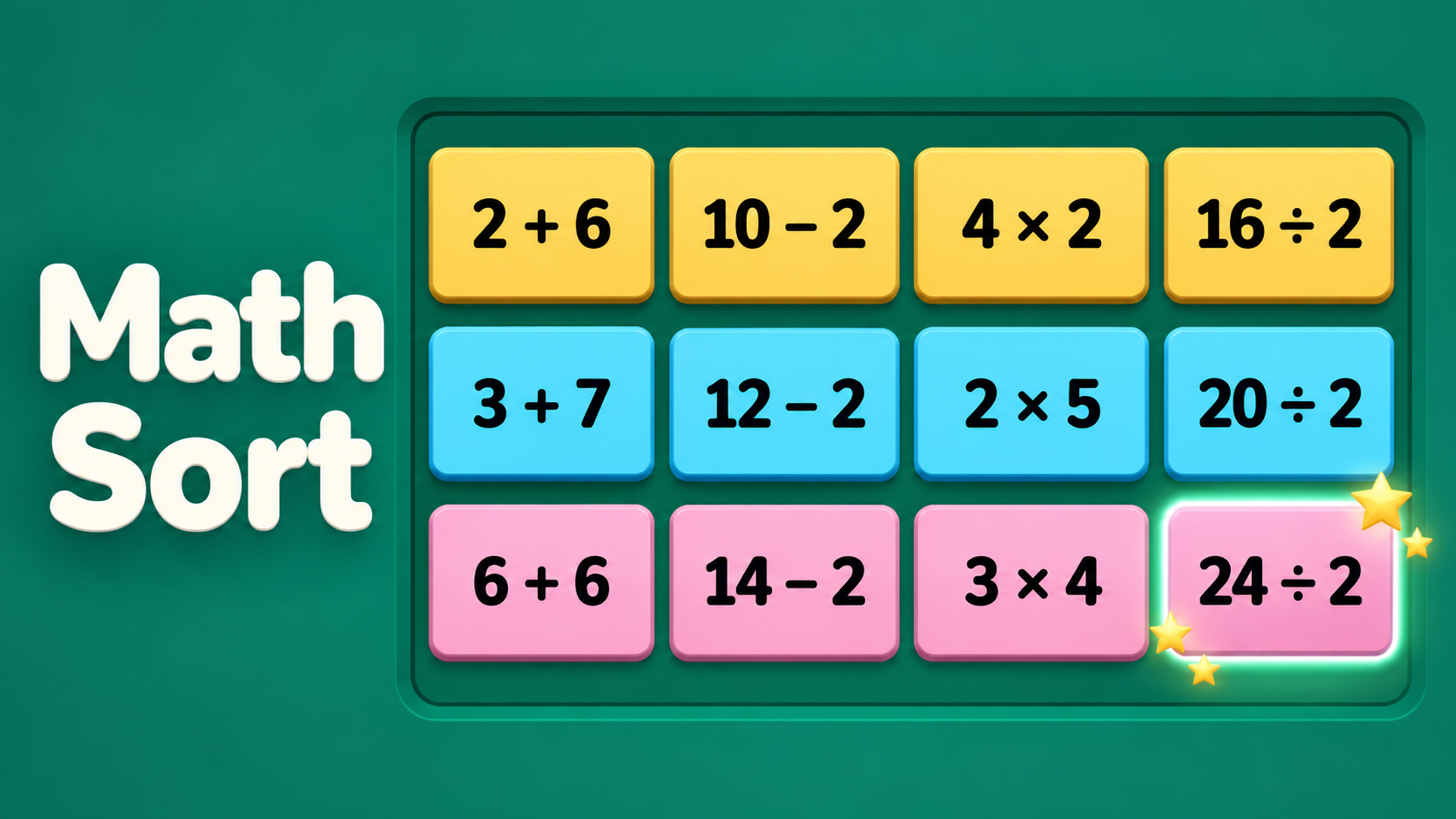
Math Sort is a colorful puzzle game where the goal is to sort math tiles into matching rows by solving addition, subtraction, multiplication, and division equations. The game opens with simple sums and gradually introduces new challenges across 120 levels, plus daily puzzles to keep things fresh. One scene shows a grid filled with rectangular tiles in yellow, white, light blue, pink, purple, and orange. The overall feel is relaxed and satisfying, with smooth controls and sparkling celebrations when rows are completed.
How to play: Every tile displays a math equation. Tiles like 6 + 6, 3 × 4, and 24 ÷ 2 all resolve to 12, so they belong in the same row. Colored tiles already placed on the board give clues about each row’s target answer. The objective is to fill every row with tiles that share the same answer before running out of moves.
How to play: Think ahead—every swap counts. Dragging a tile and returning it to its original position without completing a swap does not cost any moves. When stuck, tapping the lightbulb icon provides a guided hint.
- Drag a tile onto another tile: Swap the two tiles
- Tap two tiles: Swap the two tiles
- Drag a tile and return it: Cancel without using a move
- Tap the lightbulb: Receive a guided hint
Halloween Tom Math Challenge
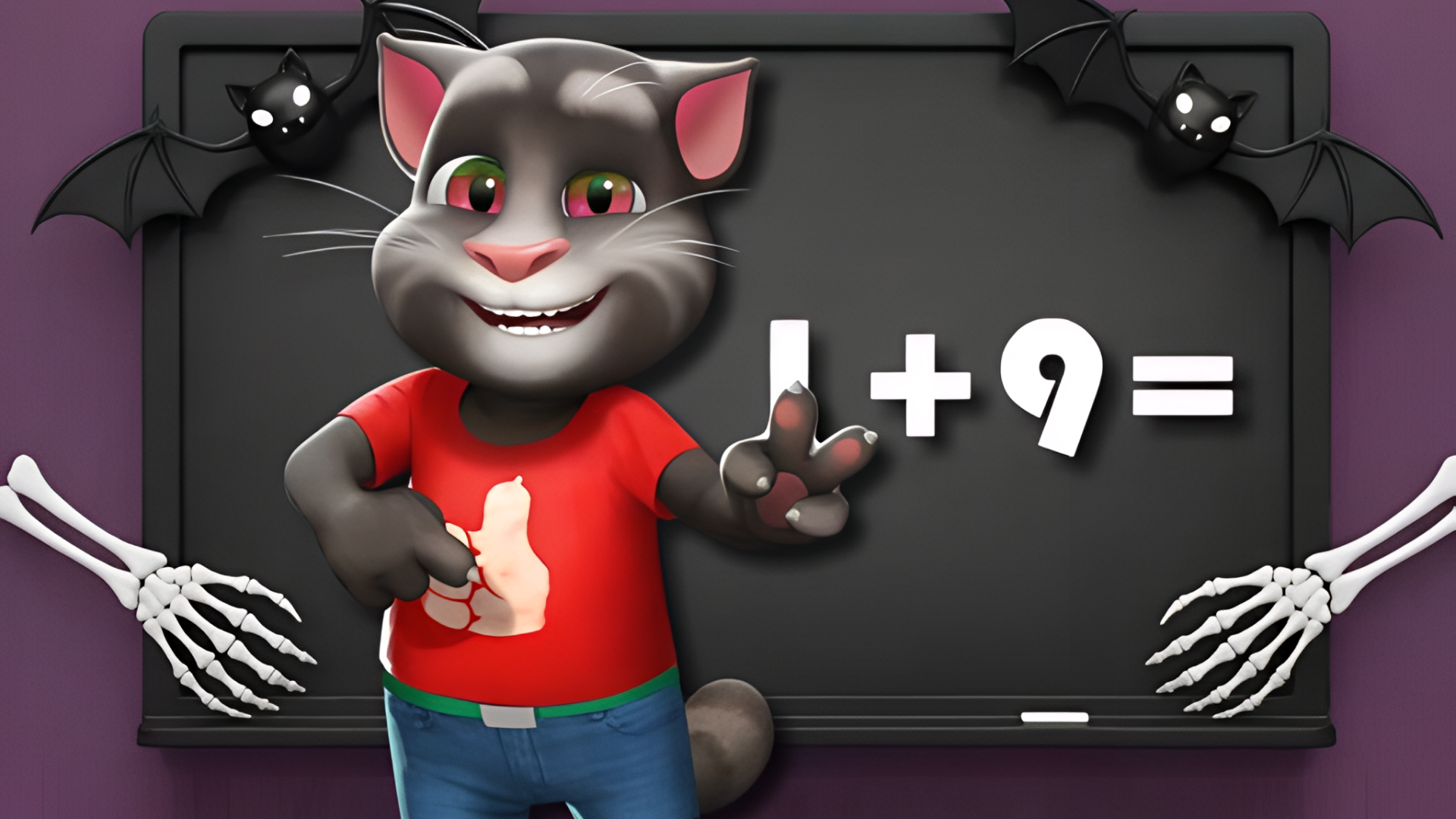
Halloween Tom Math Challenge is a Halloween-themed math quiz where a little witch cat needs help solving equations against the clock. The festive atmosphere fills every round with bats, pumpkins, and ghosts, making arithmetic feel like a seasonal adventure. Aimed squarely at kids who enjoy both math and Halloween, the game keeps things lively with a score that grows the more correct answers land in time.
How to play: Each round presents math equations that must be answered before the timer runs out. Pick the right answer from the available options to keep the score climbing — the more correct answers, the better the final result. The equations are designed to be approachable, so the focus stays on speed and accuracy rather than complexity.
- Left mouse button: Select answers and interact with the game
Numbers – Merge Master
Numbers – Merge Master refines the merge genre with sophisticated number progression systems that reward strategic thinking and pattern recognition. The game’s escalating complexity requires players to plan multiple moves ahead while managing limited board space efficiently. Its polished visual effects and satisfying merge animations create an almost hypnotic gameplay loop that keeps players engaged for hours.
Mathematicians have discovered that optimal play in Numbers – Merge Master follows Fibonacci sequence patterns, leading to academic papers on game theory applications.
The game’s sophisticated monetization strategy includes cosmetic number themes and power-ups that enhance rather than replace skillful play. Its competitive leaderboards have fostered a dedicated community of strategy-sharing players.
Make 100!
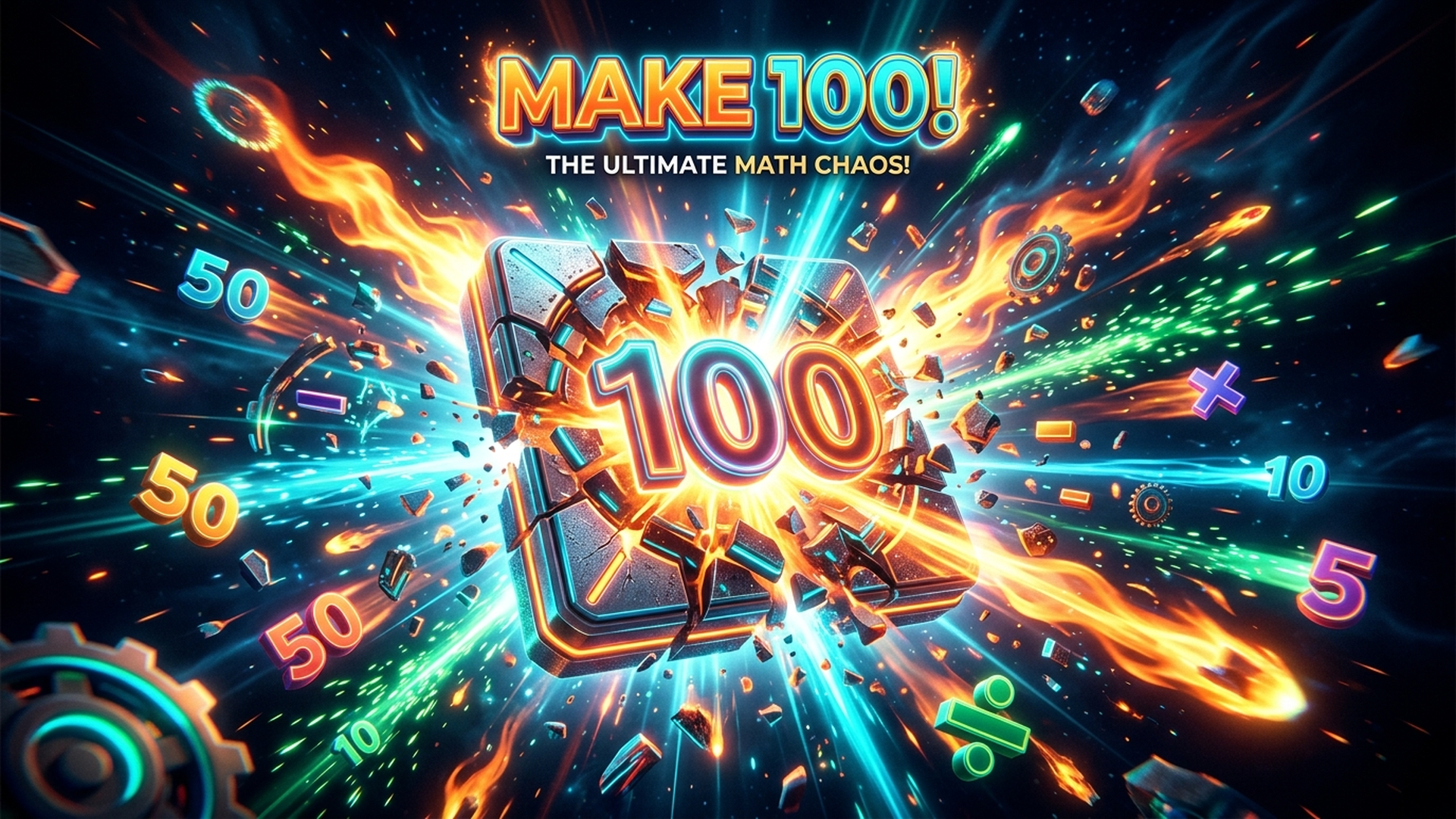
Make 100! is an addictive, fast-paced mathematical logic puzzle game where every move counts. Starting from a random number, the challenge is to apply the right sequence of operation cards — addition, subtraction, multiplication, and division — to land on exactly 100 before the move budget runs out. The game presents infinite procedural rounds, adaptive difficulty scaling, tactile sound feedback, and global leaderboards, making it a brain-teasing experience for puzzle lovers of all ages.
How to play: Each turn presents three operation cards, each carrying a mathematical modifier (+N, -N, ×N, or ÷N). Selecting one card applies that modifier to the current number. The objective is to reach exactly 100 on the final move — not close, not over, but precisely 100. Planning several steps ahead is essential, since the move budget is finite and every card choice shapes the path forward.
- Mouse / Touch: Tap or click a card to apply its operation; tap header icons to toggle sound and themes.
- 1, 2, or 3: Press the corresponding key to pick a card.
- Enter / Space: Play or Try Again.
- Esc: Close modals.
Number Sums
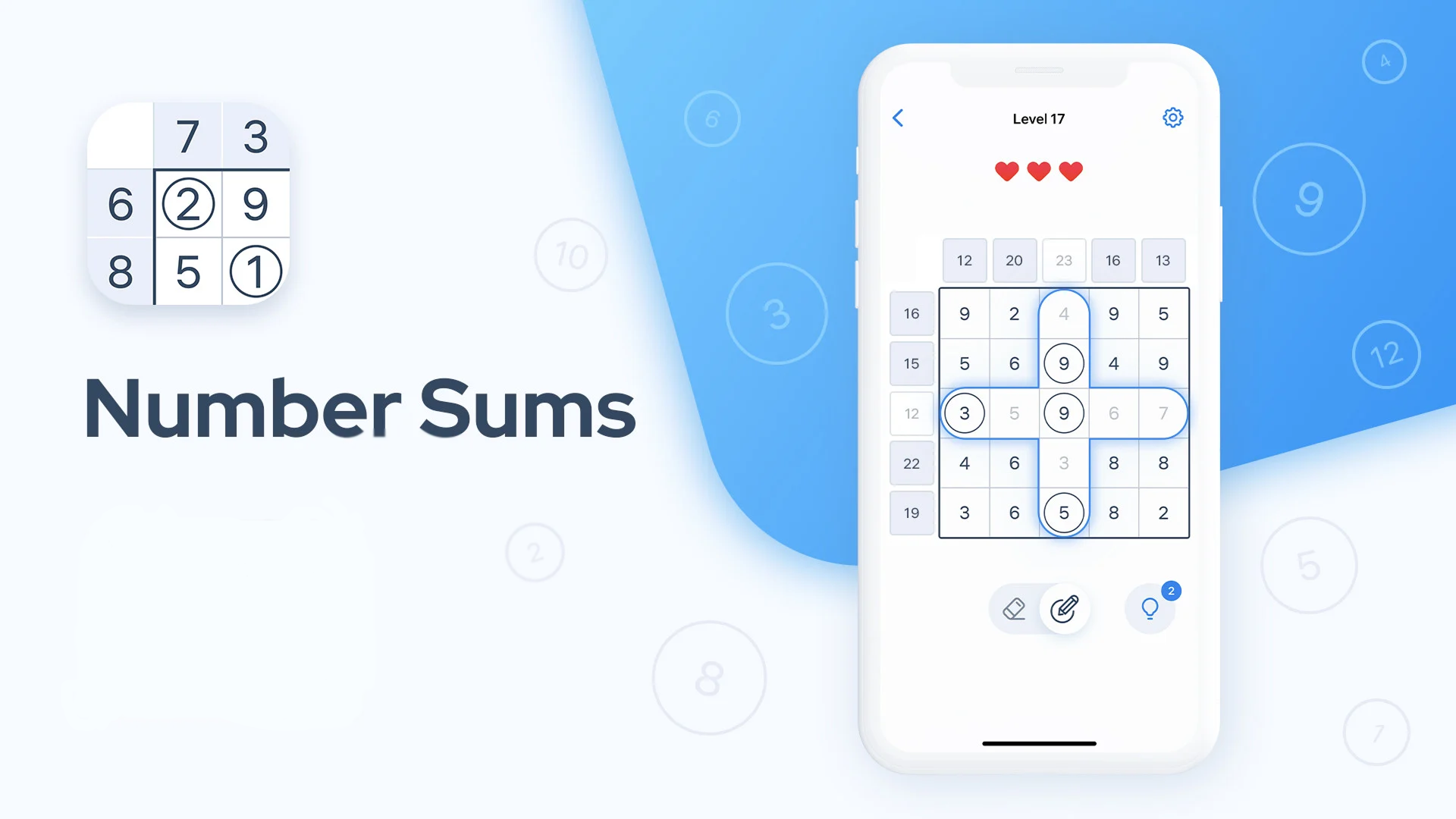
Number Sums is a challenging number puzzle built to train mental arithmetic. The goal is straightforward to state but demanding to execute: the sum of numbers in every row, every column, and every colored region must simultaneously equal the clue values shown on the sides of the board and inside each region. Every level has exactly one solution, and finding it requires holding all three constraints — rows, columns, and colored regions — in mind at once. The game offers math puzzles across various difficulty levels, making it suitable for anyone looking to sharpen addition skills and logical thinking.
How to play: Each board presents a grid of numbers alongside clue values on the sides and inside the colored regions. The task is to identify which numbers belong and which are surplus, so that every row, column, and colored region sums to its assigned clue simultaneously. Because each level has only one valid solution, rows, columns, and regions must all be satisfied at the same time — solving one in isolation is not enough.
Number Sums
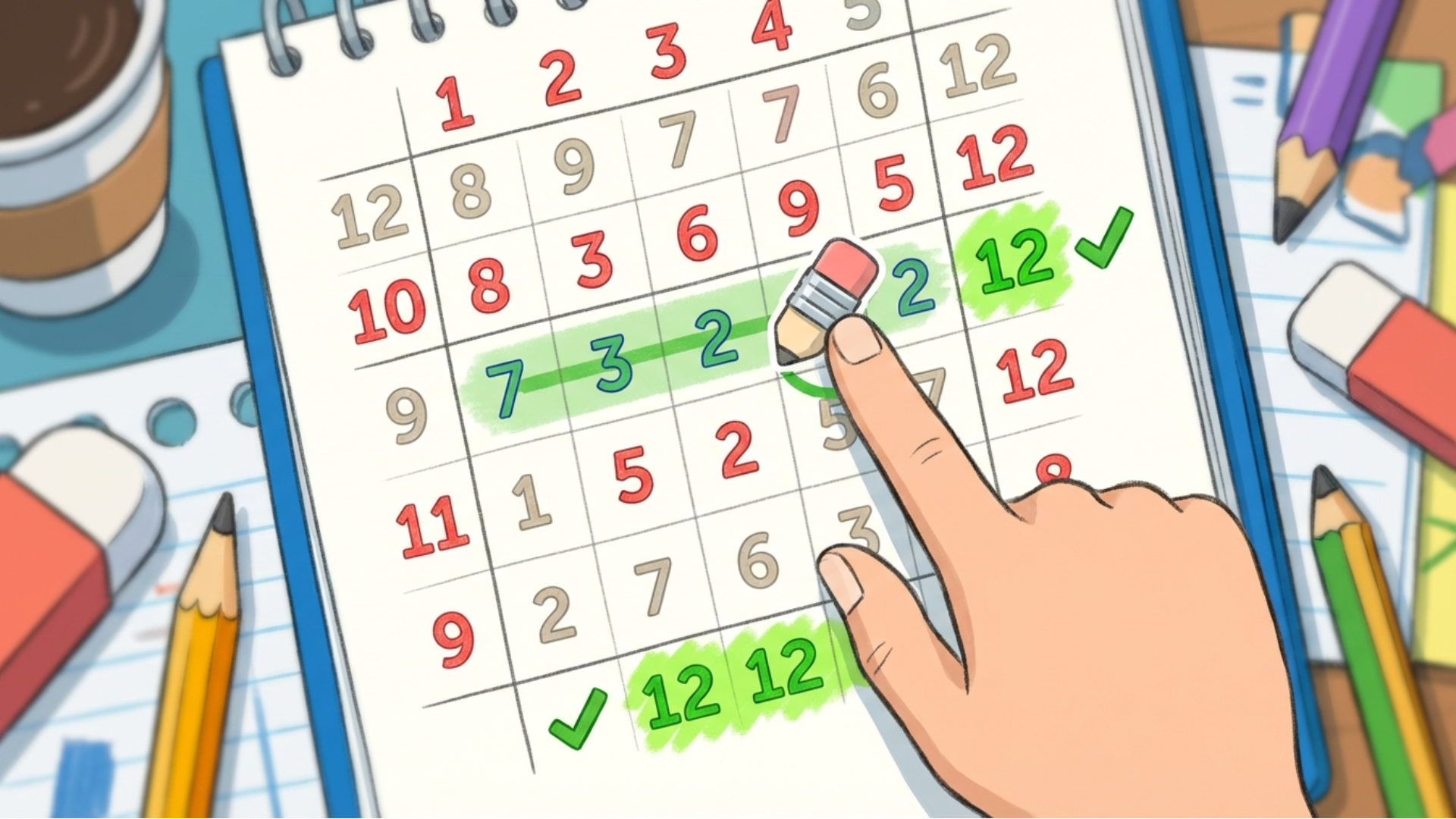
Number Sums is a logic puzzle game built around a deceptively simple idea: select numbers on a grid so that every row and column adds up to its target sum. The target for each row appears on the left, and the target for each column appears at the top. Several scenes show a central grid of black digits arranged in rows and columns against white and colored square backgrounds.
How to play: Each row and column displays a target sum. Tap numbers on the grid in Select mode to mark them as part of your solution. Every row and every column must have selected numbers that add up to its respective target. When a row, column, or region is solved correctly, the remaining numbers in that line disappear automatically. Fill all targets correctly to complete the puzzle.
How to play: Use Remove mode to eliminate numbers you are certain do not belong in the solution. This helps narrow down the remaining candidates and clarify the path to the correct answer.
- Tap (Select mode ✏️): Select a number on the grid
- Tap (Remove mode 🗑️): Eliminate a number you are sure does not belong
TL;DR
Math games have evolved from simple educational tools into sophisticated entertainment experiences that rival traditional gaming genres in engagement and profitability. These titles prove that learning and fun aren’t mutually exclusive, with innovative mechanics that make mathematical concepts genuinely exciting. As educational gaming continues to mature, we can expect even more creative approaches to making mathematics accessible and addictive.