Table of Contents
Valeria Svistunova explains how a new distribution and monetization model helped Lagged.com significantly increase revenue per play.
- Lagged.com reworked its game distribution and monetization approach by integrating an external HTML5 game catalog and new adtech stack.
- Early results showed a significant increase in revenue per play, with median gCPM rising from $1.65 to $3.11 across the platform.
- The model also provided deeper game-level analytics, helping the platform identify high-performing developers and titles more quickly.
HTML5 games are no longer confined to dedicated gaming portals. Over the past few years they have spread across social media, messaging apps, and mainstream digital media platforms. As audiences fragment across these surfaces, traditional web gaming sites face increasing pressure to evolve both their content pipelines and monetization strategies.
Play free games on Playgama.com
For many platforms, the core challenge is operational: how to maintain a constant flow of fresh games while preserving monetization efficiency. Legacy systems — built around manual game uploads and rigid advertising integrations — often struggle to keep up with these demands. A recent experiment by Lagged.com illustrates how some platforms are addressing this shift.

Valeria Svistunova is Head of Monetization at Playgama
The content–monetization balancing act
Lagged.com serves more than 20 million players worldwide and hosts a large catalog of free browser games. Like many portals in the HTML5 ecosystem, the team must constantly balance two priorities: expanding the catalog while ensuring the platform remains economically sustainable.
Content management is one side of the equation. Each new game requires moderation, testing, and technical integration before it can go live. When games are uploaded as standalone archives, updates or fixes often require additional maintenance from the platform team.
Monetization presents a different set of constraints. Many portals rely on third-party advertising solutions such as Google AdSense. While these systems simplify ad delivery, they can limit flexibility in how ads are integrated within gameplay experiences.
To address both challenges simultaneously, Lagged.com decided to partner with Playgama: we provide infrastructural solutions around monetisation and distribution for web game developers and web gaming portals.
A different model of game distribution
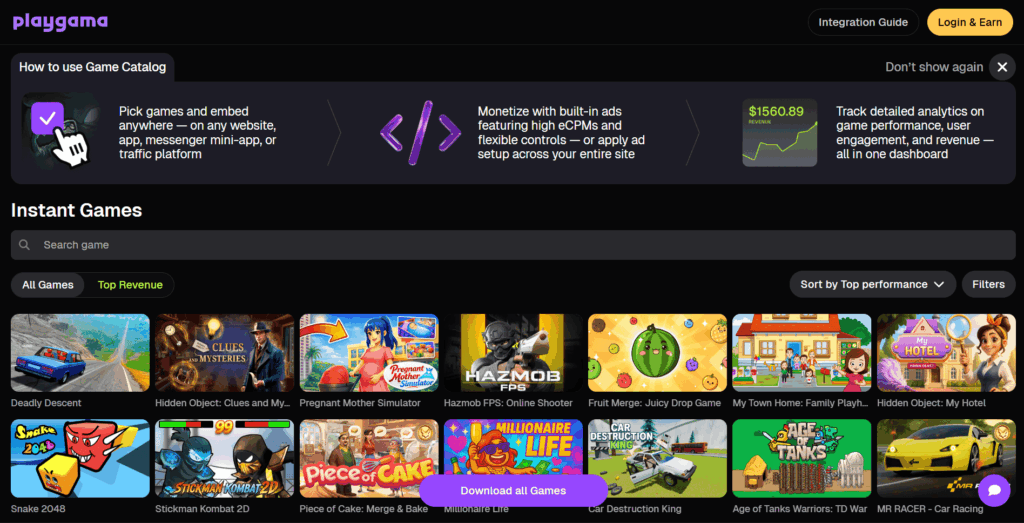
In September 2025, Lagged.com integrated a catalog of HTML5 games distributed through Playgama. After creating an account and receiving a client ID, the team was able to select titles from the catalog and embed them directly on the site.
From a technical perspective, the process is relatively lightweight. Because the games are hosted externally, they can be embedded using a simple iframe. This allows platforms to add new titles without storing large builds locally or managing their infrastructure.
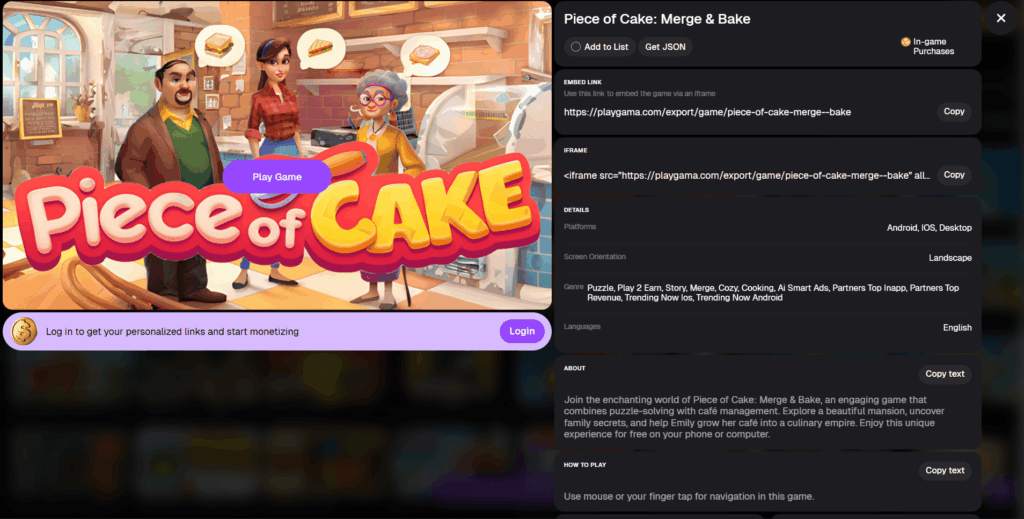
For Lagged.com — which focuses heavily on hyper-casual browser games — this approach significantly simplified content updates. New titles could be tested and published quickly, while the catalog itself was already moderated and organized into genre-based collections designed for different audiences.
“With content updates and moderation off our plate, we had more time to step back and focus on the bigger picture for Lagged.”
— Dom Bruno, CEO, Lagged.com
Adjusting monetization inside the game
Once a game is embedded, the next step is configuring monetization. Instead of relying solely on traditional display ads around the game window (Google AdSense), this model introduces advertising formats directly inside gameplay sessions.
Platforms can adjust several parameters, including:
- Turning prerolls on or off and adjusting the in-game ad frequency according to the platform policy to manage ad fatigue.
- Cross-linking backfill creatives to other games from the catalog in case the ad space is vacant to ramp up gameplay times.
- In-game purchases to boost gCPM with an additional revenue stream.
- Intrinsic formats that are integrated into the game itself, letting the gameplay flow uninterrupted.
While many of these formats already exist in the broader gaming market, integrating them within a single distribution framework allows platforms to experiment more quickly with different monetization approaches.
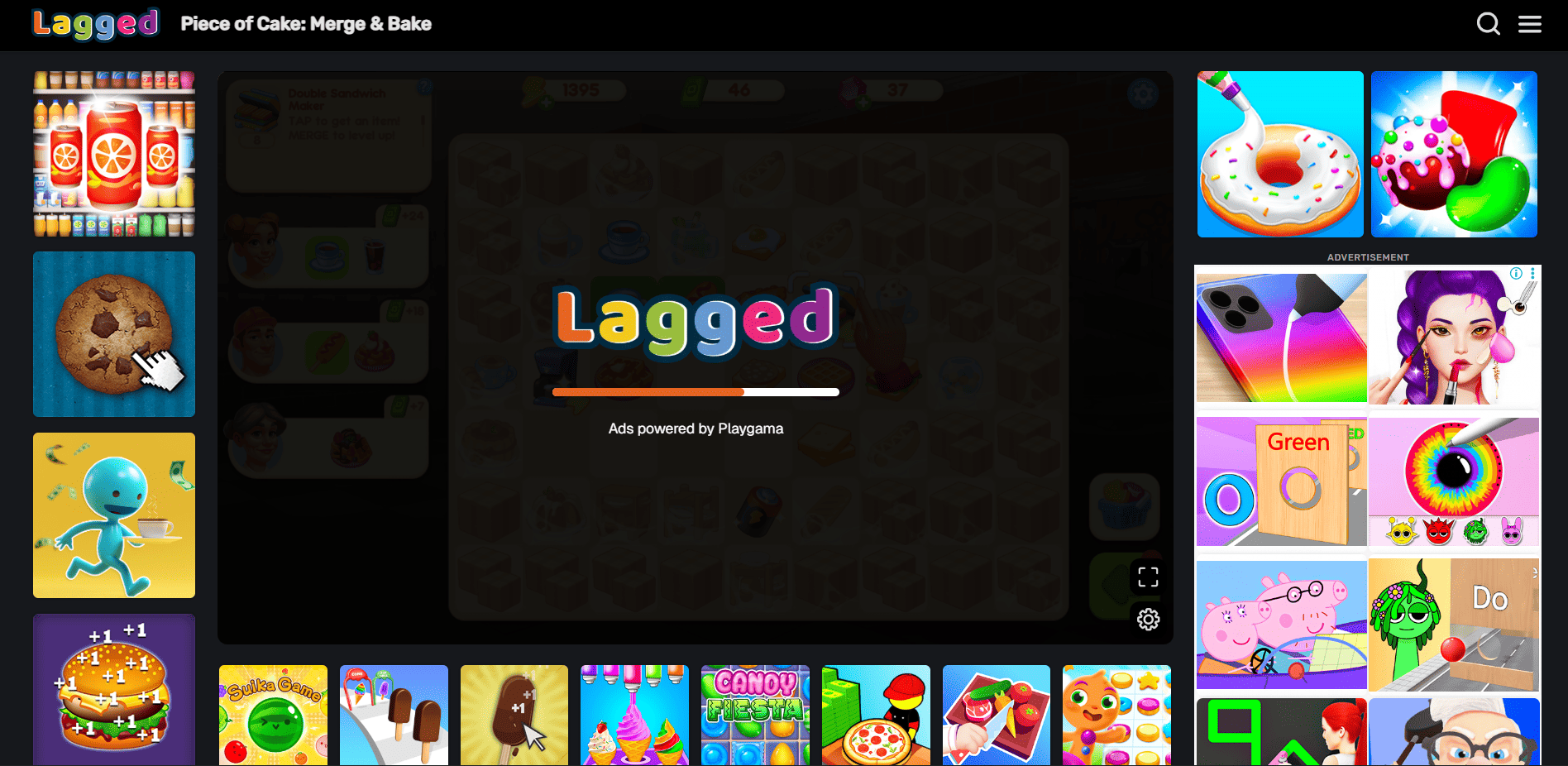
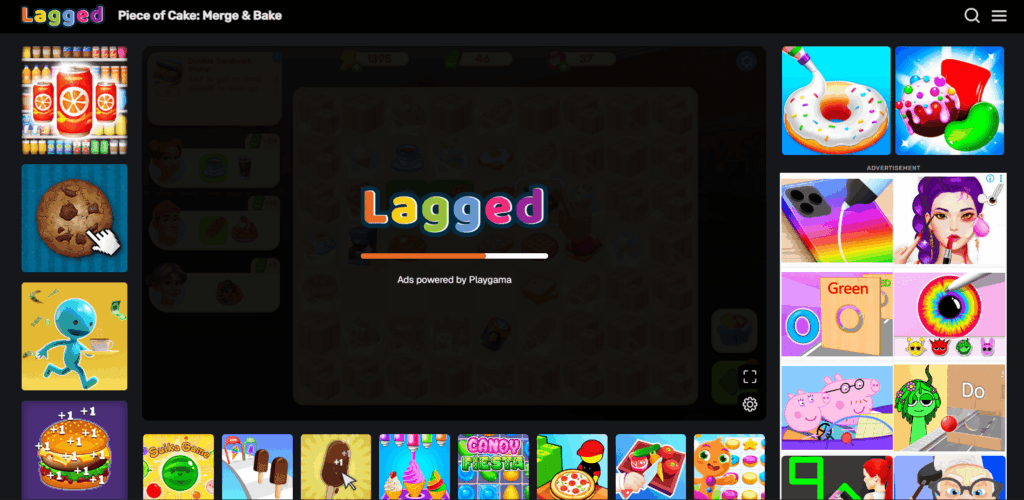
Another notable feature is the ability to brand the advertising interface so that ads appear within a wrapper consistent with the host platform’s visual identity (in this case, “Lagged — Ads powered by Playgama”).
Early results from the experiment
Within two months of launching the integration, Lagged.com began observing measurable changes in monetization performance.
The table below compares the gross cost per thousand impressions (gCPM) for two titles from the catalog before and after the integration.
The main tangible achievement within this collaboration is increased ad revenue per play.
Genre of the game | gCPM before the integration (Aug–Sep), $ | gCPM after the integration (Oct–Nov), $ | Growth, % |
| For Girls | 3.10 | 6.11 | 197 |
| 3D Action | 0.77 | 1.31 | 170 |
| Median value across the platform | 1.65 | 3.11 | 188 |
Interestingly, the improvement occurred during a period when overall gameplay volume declined by roughly 33% following the summer season. This suggests that the change in monetization structure — rather than audience growth — contributed significantly to the higher revenue per session.
According to Lagged, the ability to test new games quickly and identify those that resonate with their audience also played a role.

“Having access to detailed, game-level performance data lets us see what’s really working. It’s become a launchpad for spotting standout developers early and doubling down on relationships with teams that consistently deliver hits.”
— Dom Bruno, CEO of Lagged.com
Operational impact
Beyond monetization, the integration also affected the platform’s operating costs.
Because games are embedded rather than stored as local builds, Lagged.com no longer needs to host large archives on its own servers. The platform also reduced the time spent managing ad infrastructure.
“Cutting server overhead and ad management complexity helped us lower OPEX and operate more efficiently.”
— Dom Bruno, CEO of Lagged.com
The operational changes freed up time for the team to focus on broader platform strategy rather than day-to-day content management.
What this means for web gaming platforms
The Lagged experiment reflects a broader shift in the HTML5 gaming ecosystem. Instead of operating as isolated portals responsible for every part of the pipeline — content acquisition, hosting, and monetization — many platforms are beginning to rely on shared infrastructure layers.
These systems combine game catalogs, monetization tools, and analytics within a single environment. For platform operators, this can reduce technical overhead while providing more data about player behavior and game performance.
As web gaming continues to expand across new distribution channels, models that integrate content discovery and monetization may play an increasingly important role in how platforms scale.

I love the idea of deeper game-level analytics being used to quickly identify top developers. It’s often a challenge to balance fresh content with monetization, so seeing a solution that addresses both is refreshing. I’d love to see more about how the platform identifies high-performing games.