Who this is for: This list is perfect for gamers who enjoy fast-paced, skill-based challenges with fresh twists—from obby lovers and physics puzzle fans to rhythm game enthusiasts seeking engaging and accessible arcade fun.
Arcade games experienced a remarkable surge in July 2025, driven by the explosive popularity of obstacle course (obby) mechanics and physics-based challenges. The month saw unprecedented engagement rates as developers perfected the formula of simple controls meeting increasingly complex level design. From bike-riding adventures to rhythm-based platformers, these titles captured millions of players with their addictive “just one more try” gameplay loops that defined the summer gaming landscape.
Pitbike Obby
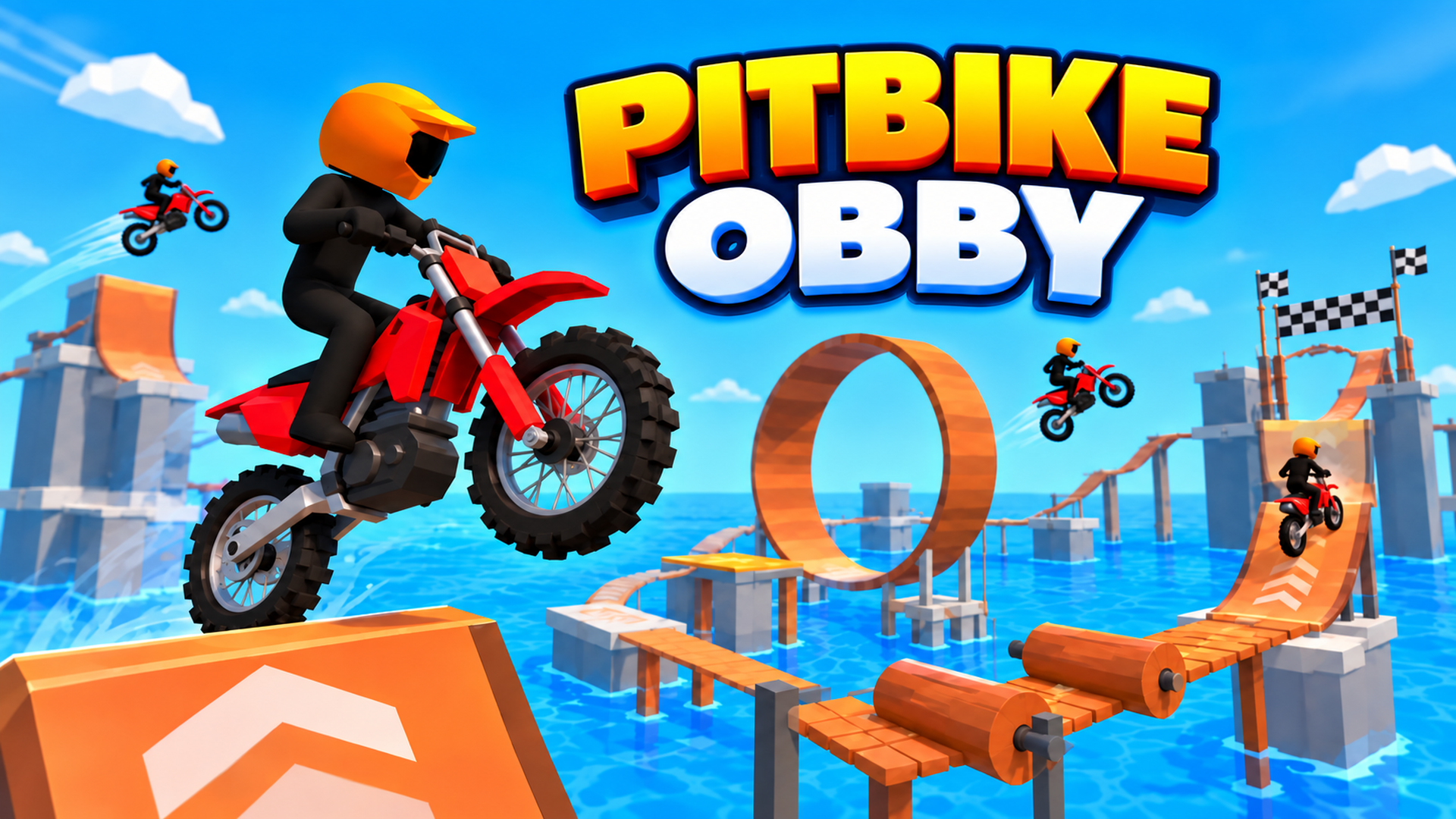
Pitbike Obby puts you on a pitbike and sends you through 101 obstacle courses, each demanding balance on ramps, precise jumps across gaps, and well-timed flips on the way to the finish line. Along the way, coins fuel upgrades and customization options that let you shape both the bike and the rider.
How to play: Each course asks you to keep your balance, avoid crashing, and reach the finish. Coins earned along the way can be spent in the garage to upgrade your bike or customize your rider with helmets, wheels, and trails.
- W: Accelerate
- S: Brake
- A / D: Lean the bike
- On-screen throttle button (mobile): Accelerate
- On-screen brake button (mobile): Brake
- On-screen lean buttons (mobile): Lean the bike
Ride Your Pet!
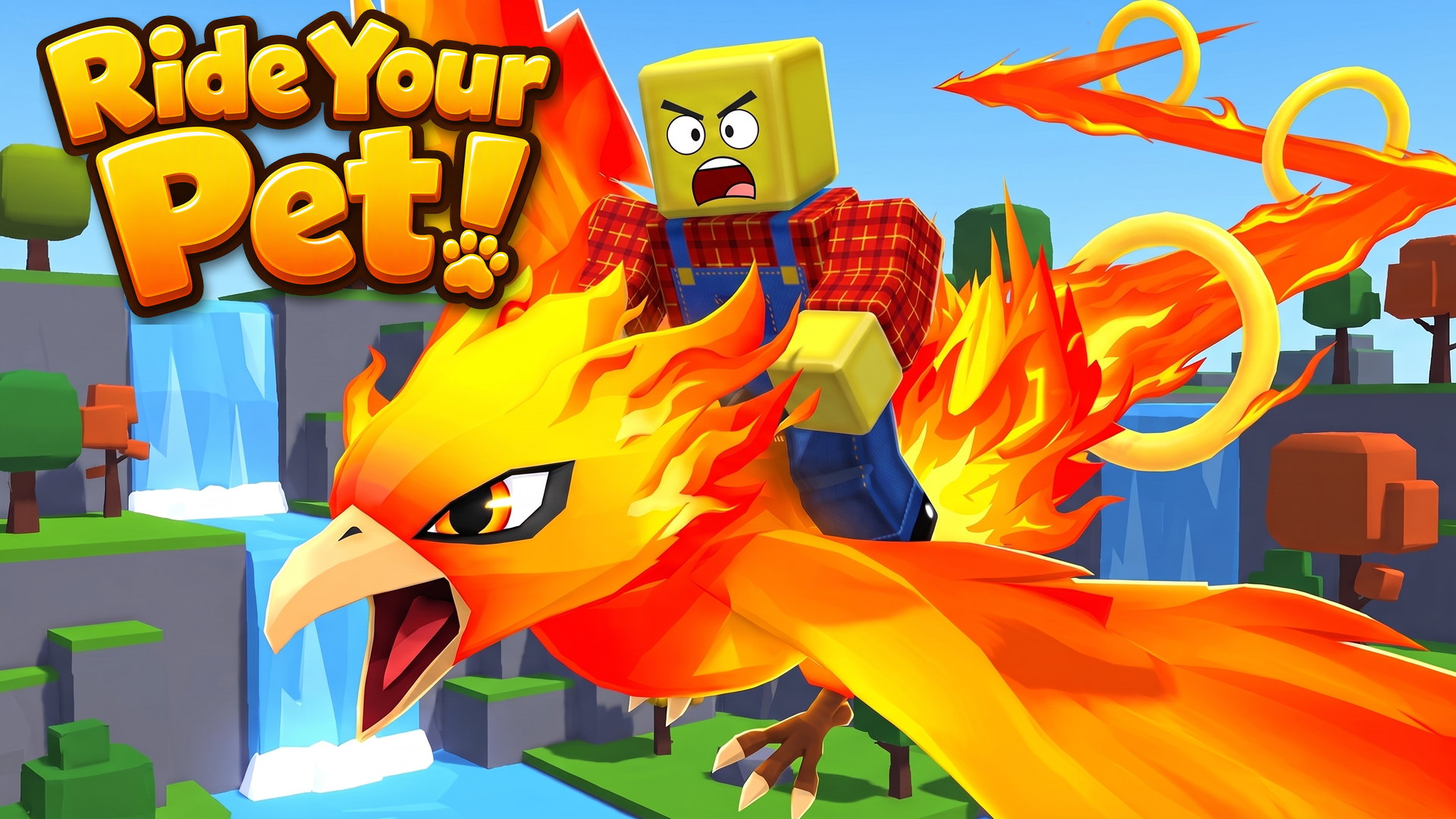
Ride Your Pet! drops you into a big open world where the goal is simple and endlessly satisfying: find eggs, hatch pets, and ride every creature you collect. From a common chick to a legendary dragon, the game spans a wide rarity ladder and keeps pushing you toward the next hatch. One scene shows a blocky character in blue overalls and a red plaid shirt standing on a dirt path beside a wooden fence. Another scene shows trees with green foliage and dark brown trunks surrounding a central enclosure where animals are kept.
How to play: Eggs are scattered across the open world. Pick them up, carry them back to the nests on your farm, and hatch whatever creature is inside. Every pet placed in your pen generates money passively, which funds the purchase of better eggs. Stronger and faster pets unlock access to new areas, and completing the full pet index is the long-term goal alongside becoming the richest farmer through rebirth bonuses.
- WASD: Movement
- Space: Jump
- Mouse: Rotate the camera
- Mouse Wheel: Zoom
- E: Interact (pick up, put in nest, ride)
- G: Drop the egg
- 1–9: Choose a pet
- B: Backpack
- Joystick: Movement (smartphone)
- Swipe: Rotate the camera (smartphone)
- On-screen buttons: Jump and interact (smartphone)
Crazy Motorcycle
This high-octane racer delivers pure adrenaline through its breakneck speed and death-defying stunts across impossible tracks. The game excels at creating heart-stopping moments where split-second decisions mean the difference between glory and spectacular failure. What sets it apart is how it makes even crashes feel rewarding—the ragdoll physics are so entertaining that wiping out becomes part of the fun.
The title’s freemium model cleverly monetizes through cosmetic bike upgrades rather than pay-to-win mechanics, resulting in a 23% higher player retention rate than competitors. Its focus on skill-based progression has attracted a dedicated speedrunning community that extends the game’s lifespan significantly.
Geometry Arrow 2
The sequel elevates the precision-based archery formula with mind-bending geometric puzzles that challenge both aim and spatial reasoning. Each level presents a new configuration of mirrors, portals, and moving platforms that transform simple arrow shots into complex physics problems. The eureka moment when you finally understand how to bank a shot off three surfaces to hit an impossible target is genuinely satisfying.
The game’s educational value has led to partnerships with several math learning platforms, creating a new revenue stream while positioning the developer as a leader in “stealth learning” games. This crossover appeal has expanded the target demographic beyond traditional arcade game players.
Vector Parkour Run
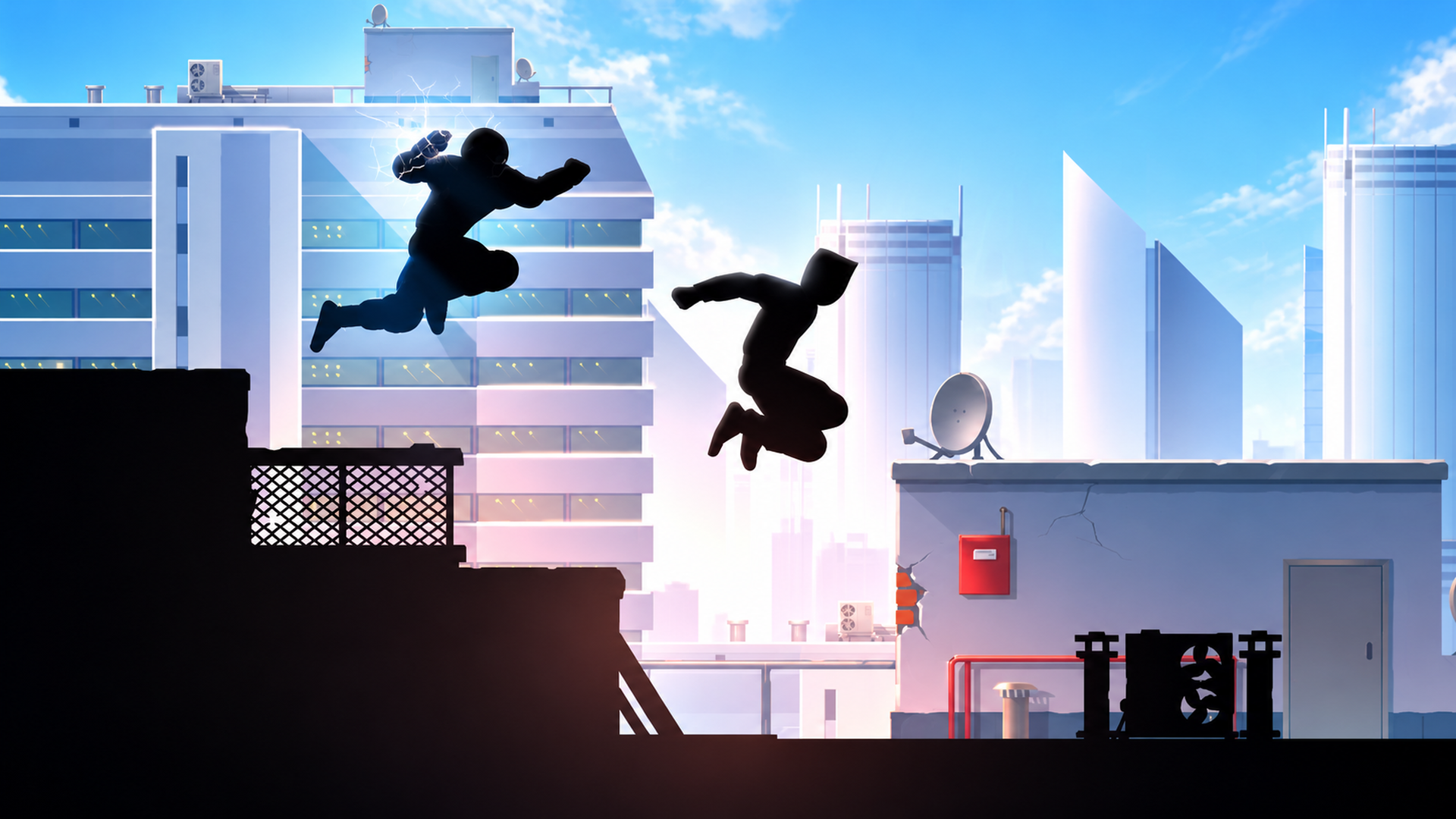
Vector Parkour Run drops you into the role of a person who has broken free from the Corporation, and every level is one continuous escape — no cuts, no loading screens between obstacles, just a single unbroken sprint across rooftops, construction sites, and research labs. The game is built around silhouette visuals, rendering your runner and the world in stark contrast. Several scenes show a black-and-yellow striped crane hook hanging from a mechanical arm. In one scene, four black birds cross a light blue sky above a rooftop.
How to play: The runner always moves forward. The core task is reading each obstacle and choosing the correct move — jump, roll, slide, vault over a fence, swing off a bar, or dive through a window — then pressing at exactly the right moment. A missed jump, a wall taken at the wrong speed, or a shot from a pursuing guard ends the run and returns you to the last checkpoint passed.
How to play: Finishing a level scores up to three stars: one for beating your own time, one for collecting every bonus cube, and one for landing every trick. Stars open the bonus levels, and coins earned fill the case and unlock new runners.
Mega Ramp Stunt
This gravity-defying stunt simulator pushes the boundaries of what’s possible in arcade physics, featuring massive ramps that launch vehicles into impossible aerial maneuvers. The game excels at making every jump feel like a death-defying spectacle, complete with slow-motion replays that highlight your most impressive moments. The standout feature is the dynamic camera system that automatically captures the most cinematic angles during your stunts.
The game’s social sharing features have generated significant organic growth, with players posting their most spectacular crashes and successful stunts across social media platforms. This user-generated marketing approach has reduced customer acquisition costs while building a strong community around stunt creativity and one-upmanship.
Obby: Mini-Games
This compilation cleverly packages multiple obby experiences into bite-sized challenges, each with unique mechanics and visual themes. The variety keeps players engaged as they jump between parkour challenges, puzzle rooms, and speed runs without ever feeling repetitive. The genius lies in how each mini-game teaches different skills that compound when you return to previous challenges with new knowledge.
The mini-game format has proven highly effective for player retention, with the average session including 3.7 different challenges. This variety-driven approach has influenced other developers to adopt modular content strategies, recognizing that modern players prefer diverse experiences over single-mechanic games.
Geometry Arrow
The original Geometry Arrow established the template for physics-based puzzle archery with its clean aesthetic and intuitive mechanics. Players must calculate angles, account for gravity, and use environmental elements to guide arrows to their targets across increasingly complex geometric landscapes. The satisfaction of nailing a perfect ricochet shot after multiple attempts creates an addictive loop that keeps players engaged for hours.
As the foundation for the entire Geometry Arrow franchise, this title demonstrates how focusing on core mechanics excellence can create lasting appeal. Its continued popularity alongside its sequel shows that players value both innovation and the refined simplicity of well-executed original concepts.
Obby: Escape from Barry Prison
This narrative-driven obby transforms the traditional obstacle course into a thrilling prison break adventure with environmental storytelling and themed challenges. Each section of the prison presents unique obstacles that feel contextually appropriate, from sneaking past guard towers to navigating through ventilation systems. The climactic rooftop escape sequence delivers genuine tension as alarms blare and searchlights sweep the area.
The game’s success has proven that themed obby experiences can command premium engagement rates, with players spending 60% more time exploring compared to abstract obstacle courses. This narrative approach has influenced a wave of story-driven platformers that prioritize environmental immersion alongside mechanical challenge.
Delivery Life

Delivery Life puts a cat behind the wheel and tasks the player with getting packages to their destinations on time. Between runs, the car can be upgraded and conversations with city residents add life to the world around the deliveries.
How to play: Drive through the city, deliver packages before the deadline, upgrade your vehicle, and interact with the people you meet along the way.
Obby: +1 Stone Skipping
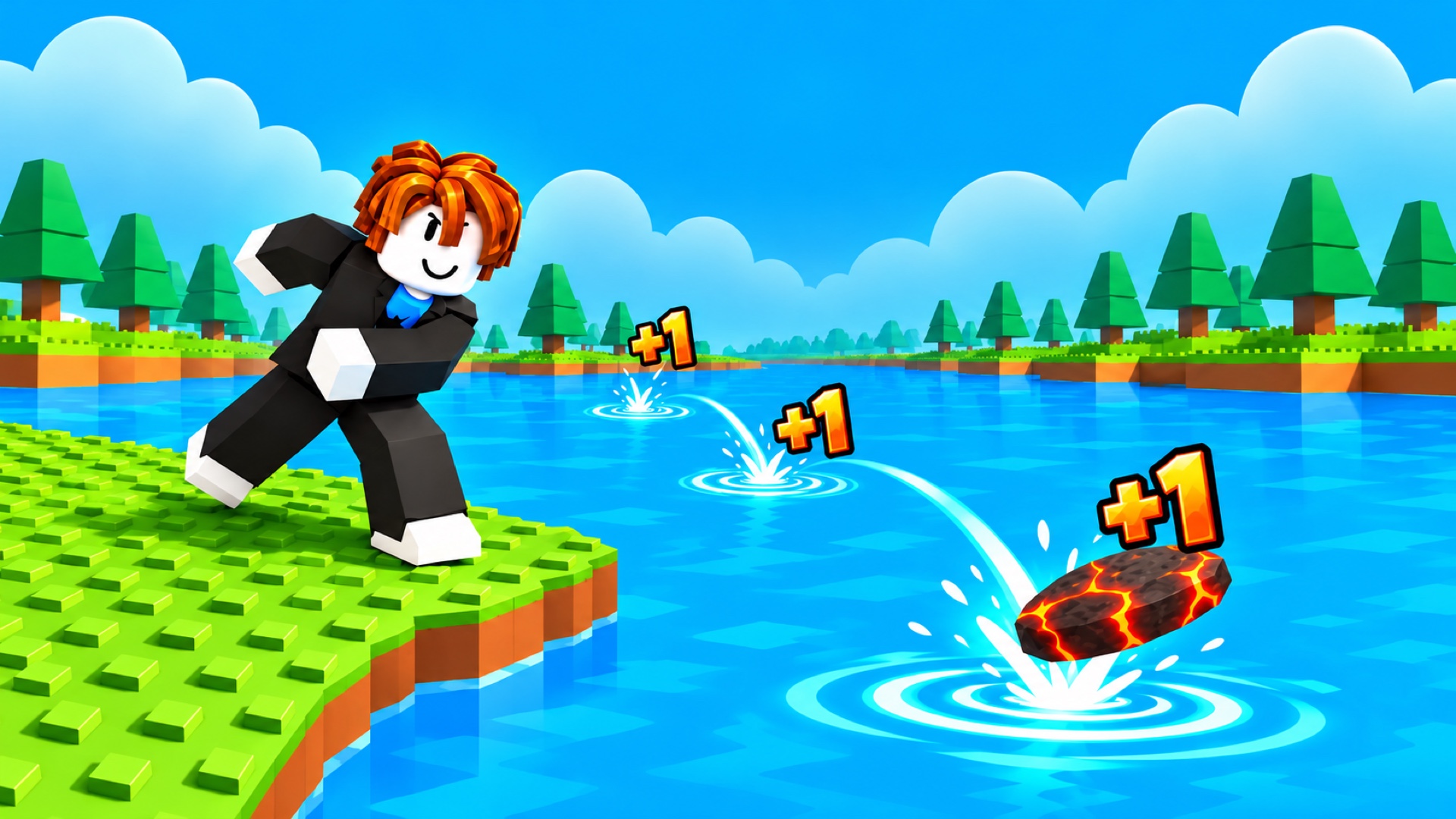
Obby: +1 Stone Skipping puts you on a throwing platform with one clear mission: send a stone skipping across the water and beat your last distance record. Each throw launches a chain of bounces, and every bounce earns experience while the total distance earns Wins, the game’s currency. Between throws, train in ponds, unlock new throwing items, equip pets that boost your progress, discover new locations, choose colorful trails, and use rebirths to grow stronger. The game supports both quick, focused throws and longer relaxed training sessions.
How to play: Walk onto the throwing platform and trigger a throw. Bounces accumulate experience that levels you up, while distance converts into Wins. Spend those resources on upgraded throwing items, equip pets for additional progress boosts, and train in ponds to build your stats. Unlock new locations as you advance, pick colorful trails, and use rebirths to keep growing stronger over time.
Obby Escape: Gym Arm Wrestling

Obby Escape: Gym Arm Wrestling puts you in the shoes of a Gym Hero on a mission to grow stronger and claim the arm-wrestling championship. The path runs through dumbbells, expanders, punching bags, powerful pets, and a roster of challenging bosses — all wrapped in the colorful, block-built style of the obby genre. One scene shows three block-shaped characters standing on a red three-tiered pedestal numbered 1, 2, and 3. Another moment captures two block-based characters locking hands while orange light beams emerge from their eye areas. A separate screen displays a collection of square-shaped creatures with varied features — wings, horns, and masks — set against a radiating green and blue background.
How to play: The core loop is straightforward: train your character to build strength, then step up to arm-wrestling matches against bosses. Defeating each boss unlocks new locations to explore. Along the way, collect pets and equipment, complete missions, and use rebirths to progress faster. The ultimate goal is to defeat every boss and become the champion.
Obby Pet Simulator X
This innovative hybrid merges pet collection mechanics with traditional obby challenges, creating a unique progression system where completing obstacles unlocks new companions with special abilities. Each pet offers different advantages for navigating specific types of challenges, encouraging players to experiment with various combinations. The emotional attachment to your virtual pets adds surprising depth to what could have been a simple platformer.
The crossover appeal between pet simulation and obby audiences has created a broader demographic reach than either genre typically achieves alone. This hybrid approach has sparked industry interest in combining traditionally separate gaming mechanics, with several major developers now exploring similar cross-genre experiments for their upcoming releases.
Jump in Rhythm to the Hit! Cat Disco!
This delightfully eccentric rhythm platformer transforms disco cats into the stars of a musical obstacle course where timing is everything. The infectious soundtrack drives every jump and movement, creating a hypnotic flow state where players become one with the beat. The visual spectacle of dancing felines navigating neon-lit disco environments while funky music pumps creates an experience that’s impossible to take seriously yet surprisingly engaging.
The game’s success proves that embracing absurdity can be a viable market strategy, particularly for rhythm games where fun factor often trumps serious gameplay considerations. Its viral potential has attracted attention from music streaming platforms interested in gaming tie-ins, suggesting new monetization opportunities for rhythm-based arcade titles.
TL;DR
July 2025’s arcade gaming landscape was dominated by innovative takes on the obby formula, with bike mechanics and creative drawing tools leading the charge. The month showcased how traditional genres can be revitalized through clever mechanical twists, narrative themes, and cross-genre hybridization. From precision-based physics puzzlers to rhythm-driven disco cats, these titles proved that arcade games continue to evolve while maintaining their core appeal of immediate, accessible fun. The success of character-driven franchises and themed experiences suggests that players increasingly value personality and context alongside pure mechanical challenge.