












No Touch Moo
No Touch Moo - Play Online
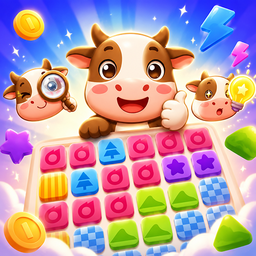
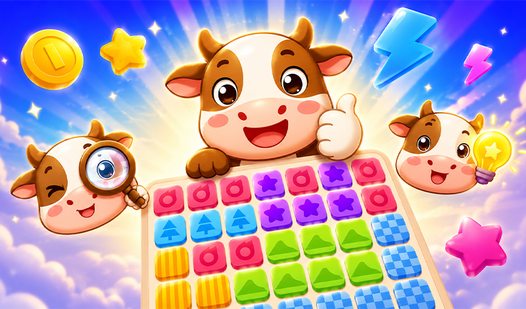
Drop cows on a colorful grid. Obey three rules. Keep every bovine from touching its neighbor. No Touch Moo strips logic puzzles to their purest form: colored regions demand exact counts, rows and columns enforce strict quotas, and diagonal contact is forbidden. Double-click to place, single-click to X-mark, swipe to eliminate whole clusters. Coins unlock hints, hearts limit mistakes, and each new level cranks the grid size until your brain screams for mercy.
How to Play No Touch Moo
Fill every colored region with the required number of cows. Match the row-and-column totals shown on the edges. Never let two cows touch—not even corner-to-corner. Study the grid constraints before you click anything; one misplaced cow cascades into chaos. Double-click empty cells to drop a cow, single-click to mark X-eliminations, swipe across cells to batch-mark impossible slots. The "Clear" button erases your last cow, "Hint" highlights a valid slot when you're stuck, and "Pattern" overlays region icons if colors blur together. Hearts tick down with each error—run out and the level resets. Coins earned from completions buy booster charges and extra hearts when you need insurance. Puzzle games that demand constraint-satisfaction logic feel instantly familiar here, but the cow-placement twist adds spatial paranoia that pure number grids never trigger.
Master the Elimination Swipe
Speed players swipe diagonals first. Any cell adjacent to a confirmed cow becomes a guaranteed X-mark—swipe it immediately to shrink the decision tree. Diagonals eliminate four cells per placed cow; rows and columns reveal forced placements when only one slot remains valid. X-marks cost nothing and expose hidden logic faster than staring at empty squares. Swipe aggression separates slow solvers from coin-farming pros.
Count Backwards From the Edge
Each row and column displays its cow quota at the boundary. If a 5×5 grid demands 2 cows per row but you've already placed 1 in row three, only 1 slot remains valid—scan the colored regions intersecting that row to find the forced placement. Count remaining slots in each region, subtract already-placed cows, and the answer emerges. Sudoku Classic trains the same backward-counting reflex; players who master row-column quotas in number grids breeze through No Touch Moo grids with colored constraints layered on top.
Pattern Mode Saves Cognitive Load
When colored regions blur into visual noise, tap "Pattern" to overlay unique icons on each zone. The game shifts from hue-matching to shape-matching, reducing eye strain and speeding up constraint checks. Late-stage grids with 7+ colors become unreadable without this toggle—activate it early to maintain solving rhythm. Accessibility features shouldn't feel optional; here they're a competitive advantage.
Key Features
- Three-Rule Logic Core: One cow per colored region, exact row-column quotas, zero diagonal contact—simple ruleset yields exponential complexity.
- Flat Vector Aesthetic: Clean mobile-optimized UI with high-contrast grids and soft shadows; Unity-rendered assets load instantly on any browser.
- Coin Economy and Boosters: Earn soft currency on level completion, spend it on hints or extra hearts when logic breaks down.
- Escalating Grid Complexity: Early 4×4 warm-ups give way to sprawling 8×8 marathons with overlapping color zones and tighter cow counts.
Who is No Touch Moo for?
Sudoku veterans seeking a grid-logic variant with spatial twist. Casual mobile players who prefer bite-sized brain workouts over twitchy combat. Nonogram Picture Cross fans will recognize the cell-by-cell deduction rhythm; Sudoku games enthusiasts get the same constraint-satisfaction dopamine but with color zones instead of 3×3 boxes. Anyone allergic to downloads gets instant-click gratification—no install, no splash screen, just grid and cows. The hearts-and-coins monetization keeps stakes casual; watch ads for free refills or grind coins to power through tough levels. Perfect for coffee-break focus or meditative evening loops when your brain craves structure without story.
Developer
No Touch Moo was developed by se. The game distills classic "queens"-style placement puzzles into a mobile-friendly format with instant browser access across desktop, Android, and iOS devices.
Controls
- Double-Click (Desktop) / Tap (Mobile): Place a cow in the selected cell
- Single-Click / Tap: Mark cell with X to eliminate invalid slots; click again to clear
- Swipe (Mobile) / Click-Drag (Desktop): Mark multiple cells with X in one motion
- Clear Button: Remove the last placed cow
- Hint Button: Highlight one valid cow placement (costs coins)
- Pattern Button: Toggle region icons for colorblind-friendly solving
FAQ
What happens if I place two cows diagonally?
Diagonal contact violates the no-touching rule. The game marks it as an error, deducts one heart, and blocks level completion until you remove one of the cows. Block Puzzle Jewel enforces similar spatial-awareness penalties when pieces overlap.
How do I earn more coins in No Touch Moo?
Complete levels to earn coins automatically. Watch ads for instant coin bundles when you need hints or heart refills. Faster solves with fewer errors yield bonus coins on later stages.
Can I play No Touch Moo offline?
The browser version requires an active internet connection to load assets and sync progress. Mobile versions may cache levels for offline play after initial download, but booster purchases and coin syncing need connectivity.
What does Pattern mode do?
Pattern mode overlays unique icons on each colored region—circles, triangles, stars—so you track constraints by shape instead of hue. Essential for colorblind players and reduces visual fatigue on complex grids. Logic games with accessibility toggles respect cognitive load; No Touch Moo makes it a core feature.
Why do some levels feel impossible?
Late-stage grids with 6+ colors and tight row-column quotas demand sequential deduction—place one cow, recalculate remaining slots, repeat. Use the X-mark swipe aggressively to eliminate dead zones. Mahjong Connect teaches the same pattern-scanning discipline; apply it here by counting backwards from boundary quotas instead of staring at the full grid.
Video