


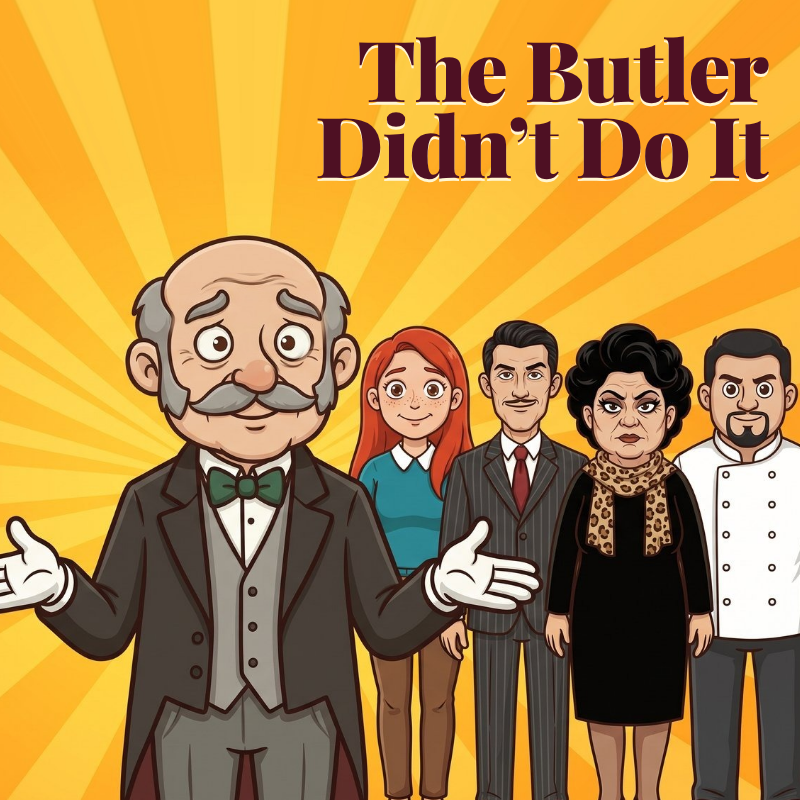
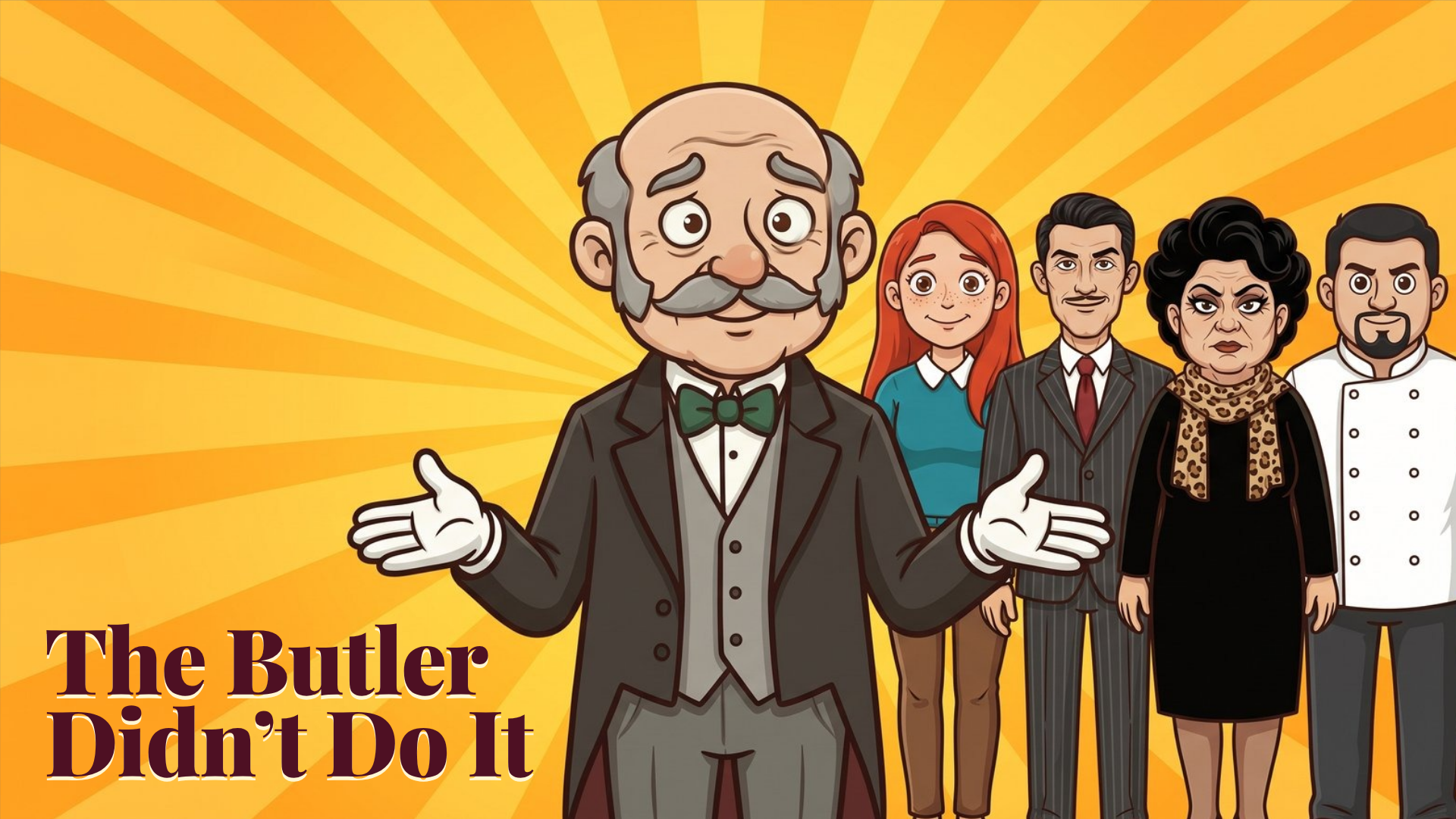


The Butler Didn't Do It
About The Butler Didn't Do It
The Butler Didn't Do It opens with a murder and a wrongly accused servant. The real killer is still out there, and finding them means placing every suspect on a crime scene map so that each row and each column holds exactly one person and every testimony checks out. Whoever lands in the victim's zone is the culprit.
Season 1 spans 150 cases across 10 locations, ranging from a gothic manor to a magic school. Boards come in three sizes — 6×6, 8×8, and 10×10 — matched to three difficulty levels. Every case is machine-checked to guarantee exactly one solution, reachable by logic alone.
How to Play The Butler Didn't Do It: Read Testimonies and Place Suspects
Open the Case file and read what each suspect says about where they stood. Each testimony describes a position relative to an object or area on the map, and every clue must be satisfied before a solution is valid.
Placement Rules
- Each row and each column must contain exactly one person — no duplicates anywhere on the board.
- A testimony about being beside an object counts only the cells in that object's zone. "Beside" means directly above, below, left, or right; diagonals do not count.
- A cell behind a wall does not qualify for zone-based testimonies.
- Things a person can sit, lie, or stand on — such as boxes, plants, rocks, and trees — block a cell entirely.
Tools and Actions
- Pick a person and select the cell where they stood to place them on the board.
- Notes mark cells that are still possible; crosses rule out cells that cannot work.
- A hint puts the selected person directly into their correct spot when progress stalls.
Controls
- Tap or click a cell: Place the selected person in that cell
- Tap a placed person: Remove them from their cell
Games You Might Like
The Butler Didn't Do It sits squarely in the world of sudoku games, where strict placement rules and pure deduction drive every puzzle. If the one-per-row, one-per-column logic appeals to you, PetDoku: Find Hidden Pets offers 2,000 deduction-only stages with the same guarantee that every puzzle is solvable without guessing. Catdoku Sudoku Puzzle adds colored-region rules and a no-diagonal-touching constraint that rewards the same careful observation the butler's case demands. For mystery fans who want clue-reading and suspect analysis in a more narrative frame, Prove It! Detective builds crime puzzles around logical deduction and evidence. Pets and Paints: Logic Puzzle takes a drag-and-drop approach to constraint satisfaction across hundreds of verified puzzles, making it a natural next step for anyone who enjoys working through layered clues. The broader puzzle games category holds even more logic challenges worth exploring.


