Marble Zen - Play Online
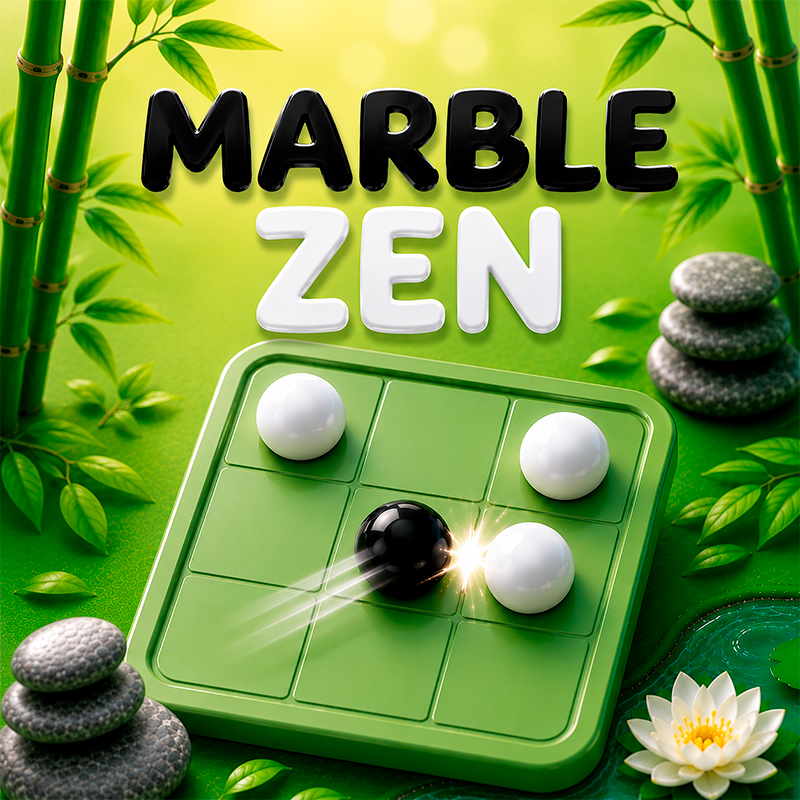
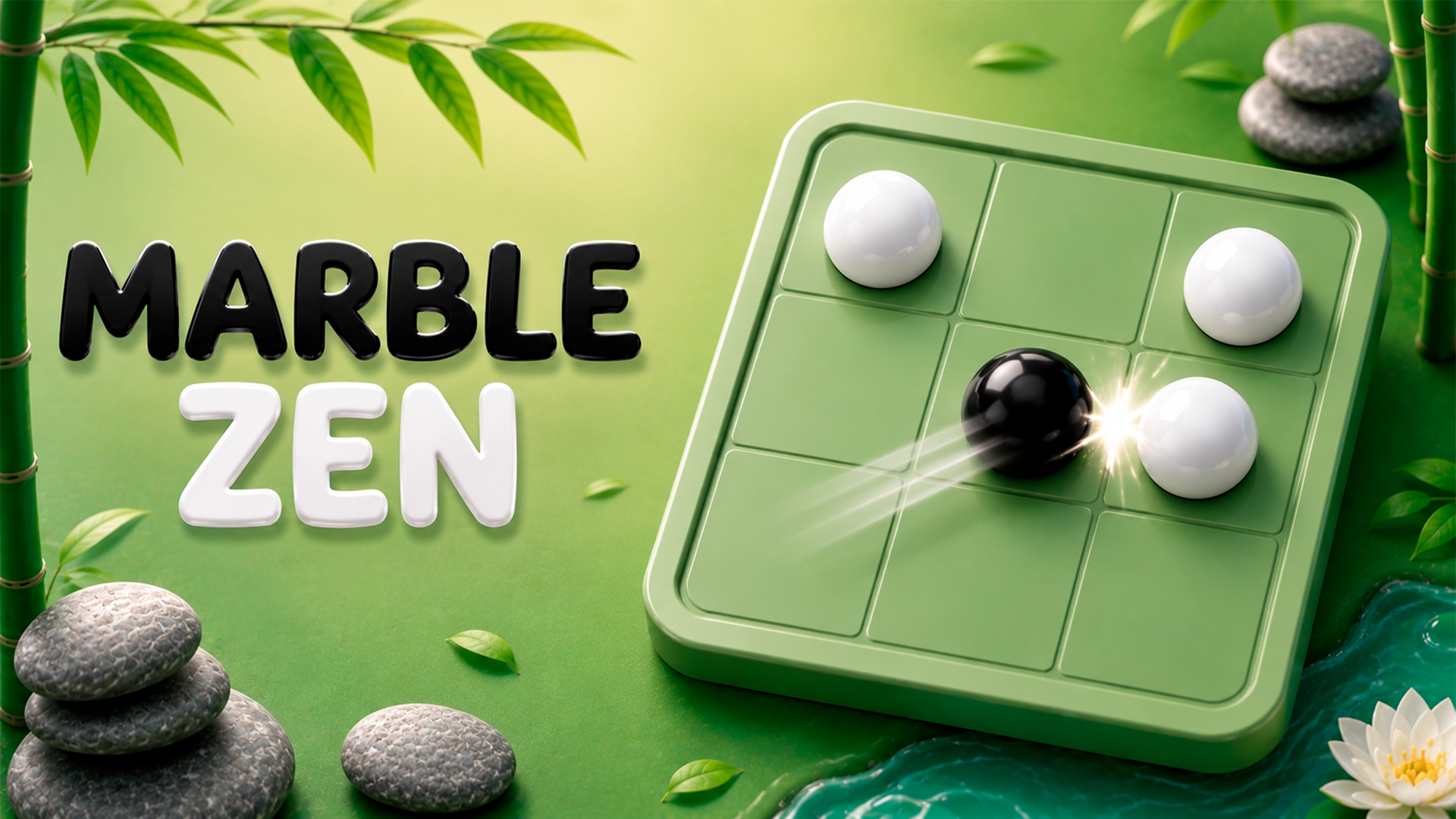
Swipe a dark orb across a minimalist grid, erasing white spheres and solving spatial logic puzzles in pure black-and-white silence. No timers, no clutter—just you, a dotted void, and a chain of satisfying clicks as obstacles vanish. Each level strips away distractions until only the puzzle remains.
How to Play Marble Zen
Slide your dark marble from dot to dot, triggering interactions with white spheres that shift or disappear. Reach the goal position without getting blocked. Directional arrows flash when a move unlocks, guiding your next swipe or keystroke.
Grid Movement and Interaction
Move in cardinal directions—up, down, left, right—across a dotted grid. White orbs act as obstacles or targets; collide to remove them or reroute your path. The board resets instantly if you miscalculate, letting you retry the same sequence until the pattern clicks. No penalties, no rush—pure iteration.
Level Progression and Spatial Logic
Early puzzles introduce single-path solutions. Later grids layer multiple white spheres, forcing you to plan removal order and predict dead ends. Levels unlock sequentially; the counter ticks upward as you clear each void. Difficulty scales through added obstacles, not new mechanics—keeps the focus tight on spatial reasoning. Puzzle games like this thrive on pattern recognition and tight rule sets.
Strategy and Pro Tips
Map all white sphere positions before swiping. Test corner moves first—they often reveal mandatory sequences. If a level feels unsolvable, reverse-engineer the goal: which orb must vanish last? Count available grid spaces; a full board means no room for error. Use the mute toggle in the corner to eliminate audio distractions during tricky chains. Players hunting calm, methodical challenges will find the same pacing in Arrow Puzzle, where directional logic and minimalist grids converge.
Key Features
- Monochrome Visuals: Flat vector spheres with soft drop shadows on a pitch-black void; zero UI clutter beyond a level counter and d-pad hints.
- Turn-Based Grid Logic: Slide one marble per move; white orbs vanish or block based on collision rules, creating branching puzzle trees.
- Sequential Unlocks: Clear Level 10, unlock Level 11—no randomization, no menus, just a steady climb through spatial challenges.
- Instant Replay: Reset any board in one tap; experiment with move orders until the solution emerges.
Who is Marble Zen for?
Built for solo players craving skill games that reward patience over reflexes. Fits hyper-casual mobile sessions or desktop coffee breaks—click and play, no downloads, any device. If you burned through Block Blast 2048's grid-merging loops, the same flat aesthetic and calm pacing carry over here. Fans of Sort The Colored Hexagons will recognize the meditative rhythm of tile positioning wrapped in brain-training logic. Casual games stripped to geometric essentials land here.
Developer
Marble Zen was developed by Kshtult. The game's sliding-orb mechanic and strict monochrome palette deliver instant-access browser puzzles across Android, iOS, and desktop platforms.
Controls
- Arrow Keys / Swipe: Move marble in four cardinal directions
- Mute Toggle: Disable sound effects
- Reset: Restart current level
FAQ
Can I play Marble Zen on mobile and desktop?
Yes. Marble Zen runs in-browser on Android, iOS, and desktop devices with zero downloads—swipe on touchscreens or use arrow keys on keyboards.
How many levels are in Marble Zen?
The level counter visible during gameplay confirms sequential unlocks, but the exact cap is not specified. Each puzzle unlocks the next after you clear the board.
What happens when I collide with a white sphere in Marble Zen?
Collision typically removes the white orb or blocks further movement, depending on the level's rule set. Watch for directional arrows that indicate valid interactions.
Is Marble Zen similar to Mahjong Lines?
Both use grid-based logic and 2D vector art, but Mahjong Lines focuses on tile-matching patterns while Marble Zen centers on directional marble sliding and obstacle removal.
Does Marble Zen have a time limit?
No. The game hides all timers and scores, leaving only the puzzle grid and level counter—pure turn-based logic with no pressure.