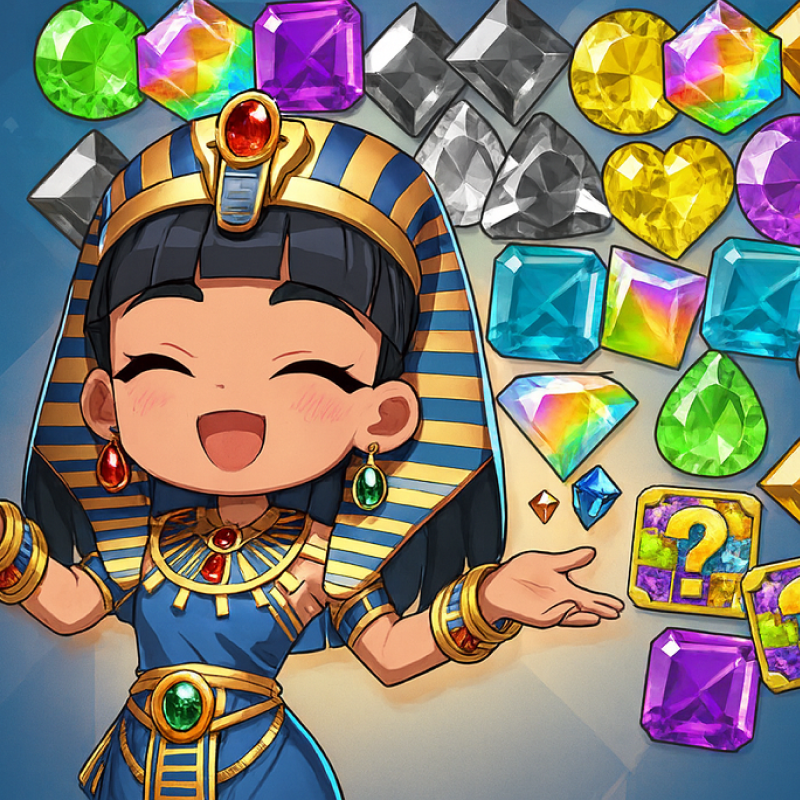
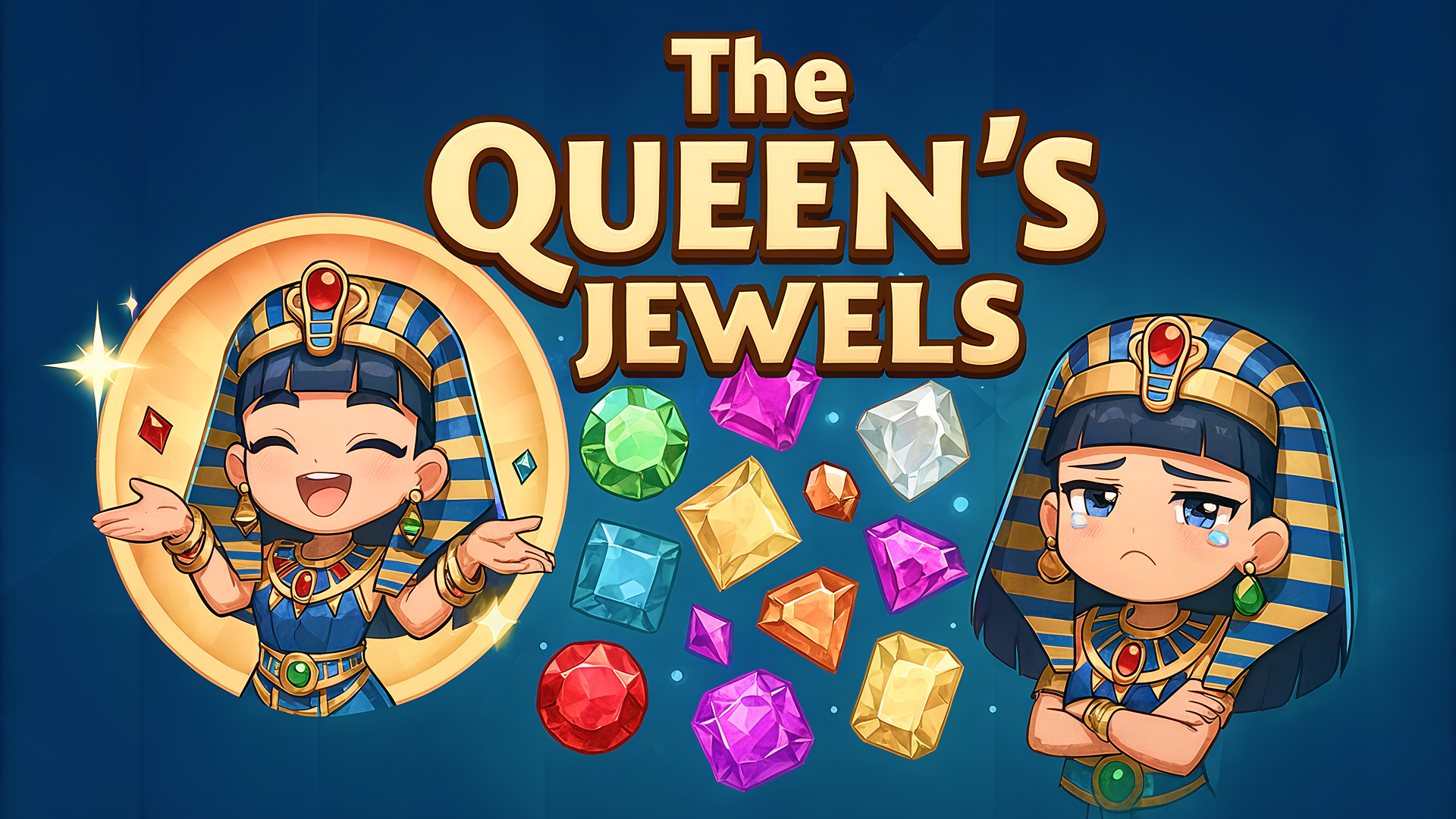
Imagine dropping colored gems through a funnel and watching them crash together in a physics sandbox—that's The Queen's Jewels. It's like someone took Bejeweled and threw it into a Plinko board with Egyptian vibes. Your goal is simple: click to release jewels, match three or more of the same color when they collide, and clear the target number before your container overflows. It's instant, mindless, and weirdly satisfying when you nail a chain reaction.
Getting started takes five seconds, but nailing the timing without jamming up your board? That's the real puzzle.
You click on jewels at the top of the screen to release them. They fall through a narrow funnel into the main container below. The physics engine takes over—gems bounce off each other, pile up, and settle wherever gravity pulls them. Your only job here is deciding when to drop the next one.
When three or more gems of the same color make contact, they pop and vanish. This clears space and racks up your score. The trick is predicting where gems will land. Drop a purple too early and it'll be buried under blues before anything matches. Wait too long and your container fills to the brim, which ends your run.
Each level gives you a "Remain" counter—that's how many more gems you need to clear to win. The challenge ramps up as colors randomize and the drop speed increases. If gems pile up past the funnel entrance, it's game over. Use your hint button to spot potential matches or hit shuffle to scramble the waiting gems when you're stuck.
Perfect for casual players who want something they can pause mid-tap. If you're the type who plays Candy Crush while waiting for your coffee to brew, this hits the same vibe. The Egyptian theme is pure mobile game nostalgia—pyramids, Anubis statues, the works—so if you've been gaming on phones since 2012, it'll feel familiar. Not for hardcore puzzle fans hunting deep strategy, though. This is about quick reflex decisions, not brain-melting combos.
It's super chill until it's suddenly not. The first few levels let you lazily drop gems and watch them clink together. By level five, you're frantically clicking and praying the physics gods give you a lucky bounce. The visuals are basic—flat vector jewels with gradient fills that look like they came from a 2010 mobile asset pack. The background is a static pharaoh illustration that doesn't move or react. No particle effects, no juice. The sound is minimal, just little pops when gems match. It's functional, not flashy. Good for zoning out, but don't expect eye candy.
The game auto-saves your progress in your browser's local storage, so you can close the tab and pick up where you left off later. Just don't go nuclear and clear your entire browsing history, or you'll lose everything. Performance-wise, it's smooth even on older hardware. I tested it on a mid-range phone from 2020 and didn't see a single stutter. The WebGL build is lightweight, so you won't hear your laptop fans spin up like it's mining crypto.
A solid time-waster if you're into low-stress puzzle games with a physics twist. Not revolutionary, but it does the job.
Responsive and simple. No lag between clicks and gem drops, which is crucial when the board starts filling up fast.
Developed by Seerand and released on October 31, 2025. It's a browser-based WebGL game, so no app store hassles—just open and play.