Ever played Peggle but wished it had that satisfying billiard-ball clack? Pool Shoot Tournament mashes bubble shooter mechanics with physics-based scoring. Your mission: aim carefully, match three or more colored balls, and rack up points as they drop into score zones at the bottom. It's simple to pick up, but chasing high scores gets seriously addictive.
Getting started is easy, but mastering the ricochet angles? That takes practice.
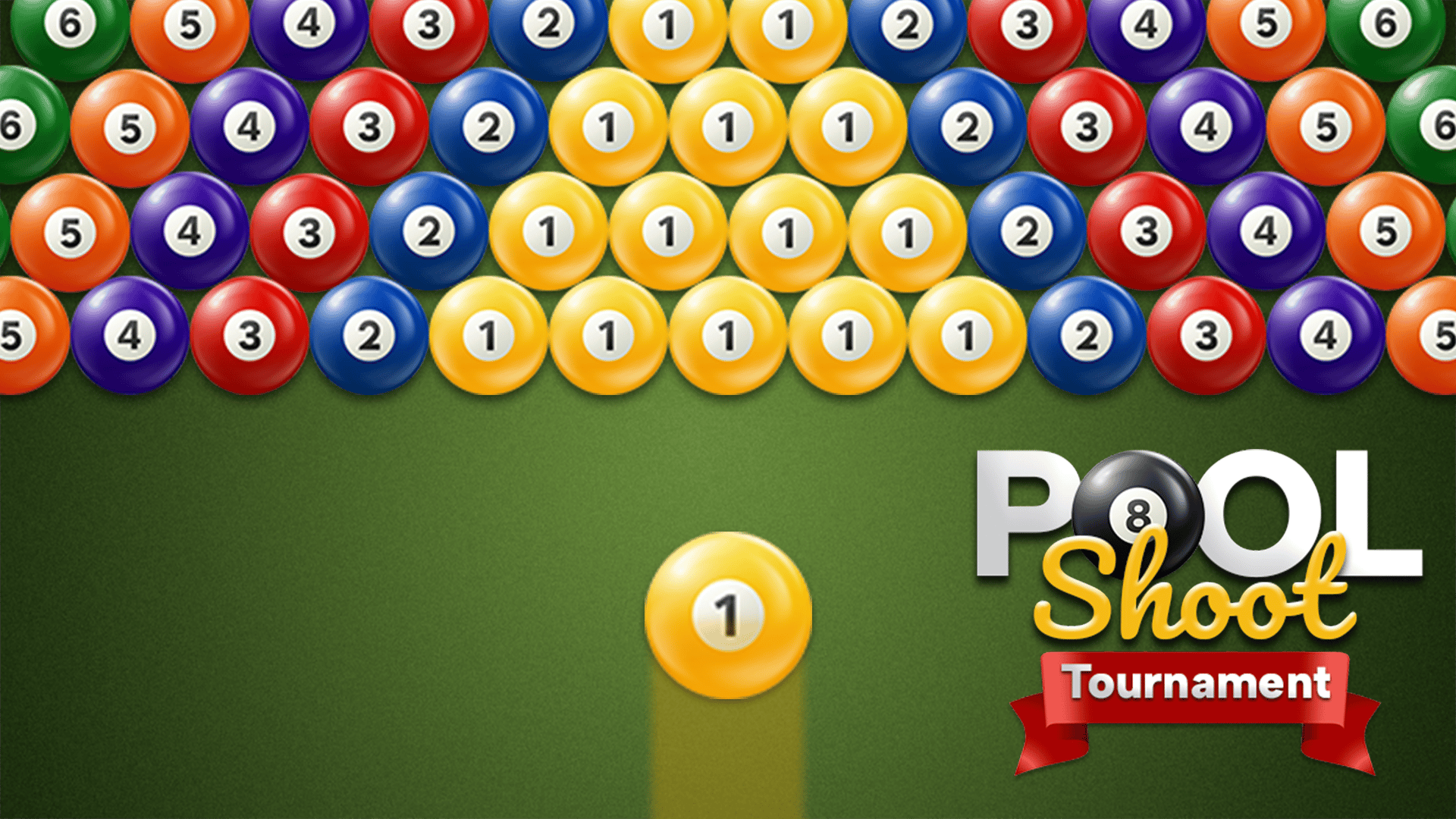
You drag your mouse or finger to aim a dotted trajectory line. The ball launches exactly where you point, bouncing off walls and smashing into the cluster. On desktop, you click to release; on mobile, just lift your finger. The physics feel bouncy and satisfying when you nail a perfect bank shot.
Here's the catch: the entire cluster slowly creeps downward after every few shots. If even one ball touches the bottom line, you lose instantly. You're racing against gravity, frantically matching colors while calculating ricochet paths. Miss a few shots in a row and you'll watch the whole mess collapse onto you.
Knocked-loose balls tumble into numbered buckets at the bottom—landing in the 250 zone feels like hitting a jackpot. The trick is creating cascades where one shot disconnects multiple groups. Chain reactions are where the big points hide, so think two steps ahead instead of just clearing the easiest match.
Perfect for casual players who love puzzle games but don't want heavy strategy. If you've got five minutes between meetings or you're riding the train home, this scratches that "just one more round" itch. It's also great for older gamers who grew up on arcade classics—the billiard aesthetic definitely targets folks who remember actual pool halls. No timers screaming at you, no violent content, just colorful balls and simple math.
It's weirdly meditative until it's not. The first few shots feel chill—you're lining up angles, watching balls bounce in slow arcs. Then the wall creeps closer and suddenly you're sweating, frantically firing at any color match you can find. Visually, it's bare-bones: basic gradient spheres on a green felt background that screams "generic mobile game." No music stuck in my head, no flashy particle effects. The satisfying part is purely the physics—that *clack* when balls collide and the mini-dopamine hit when a whole cluster breaks loose.
The game saves your high score locally in your browser's cache, so don't panic if you refresh the page—your best run stays recorded. Just avoid clearing your browsing data if you care about leaderboards. Performance-wise, this runs on a potato. I tested it on a five-year-old phone and didn't see a single stutter. The simple 2D graphics mean even budget devices handle it without draining your battery in ten minutes.
A solid time-killer that doesn't pretend to be more than it is.
Responsive enough that I never felt cheated by input lag. The trajectory line updates instantly as you move.
Developed by nartayislamkozha@gmail.com and released on March 18, 2025. It's a solo dev project, which explains the no-frills presentation.