About Only Up Parkour 2: Arcade Climbing Through a Vertical Labyrinth
Only Up Parkour 2 is an arcade game built around one relentless direction: up. The goal is to guide a character through a vertical labyrinth packed with obstacles, climbing from the ground all the way to a height of 500 metres. React quickly, jump accurately, and climb dexterously — one mistimed move sends you crashing into an obstacle or tumbling back down.
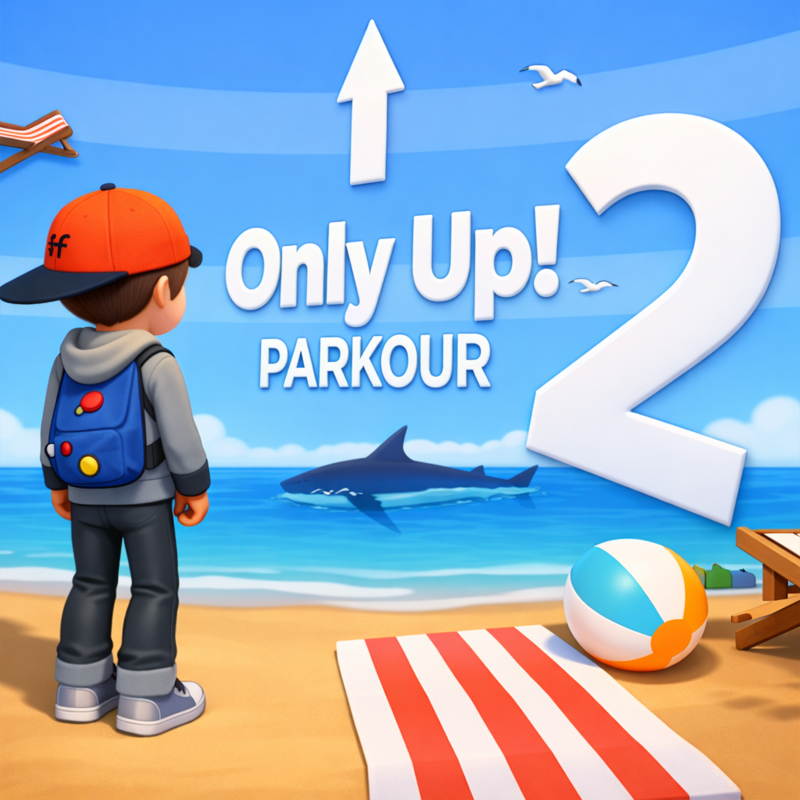
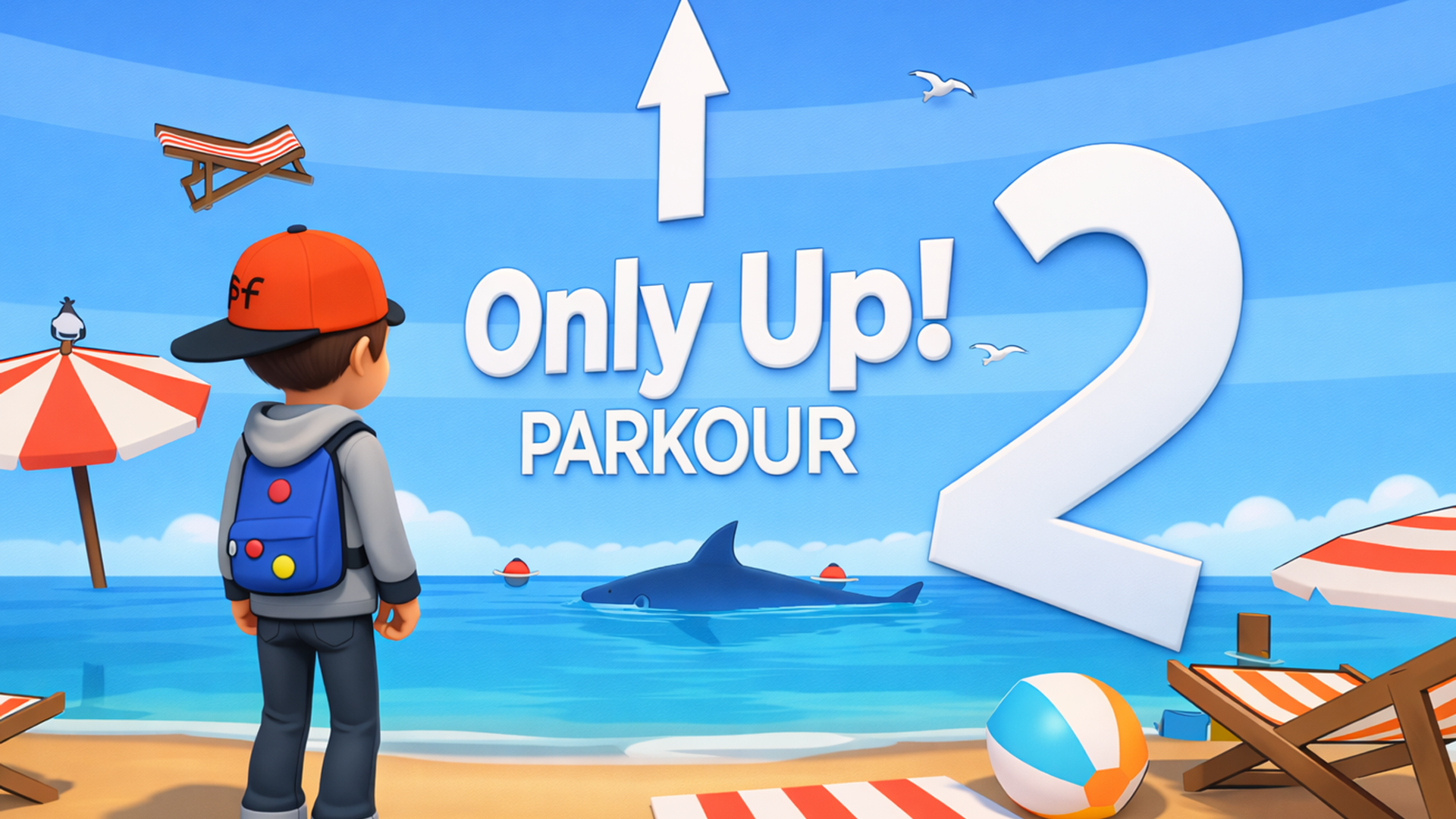
One scene places the character on a sandy beach area with red-and-white striped umbrellas, wooden lounge chairs, and a multicoloured beach ball scattered across the ground. Another moment shows elevated structures built from a blue shipping container, wooden crates, and brown wooden walkways suspended against a blue void. Elsewhere, a grey saucer-shaped craft with glowing green circular lights on its underside floats in the distance.
As the levels advance, difficulty increases and new challenges appear, including jumping platforms and fresh obstacle arrangements. The clean 3D physics-based platforming keeps the pressure on from the first step to the final metre.
How to Play Only Up Parkour 2: Climb 500M Through Increasing Obstacles
The objective is straightforward: keep moving upward through every level until the 500M summit is reached. Each level raises the difficulty and introduces new obstacles and jumping platforms, demanding accurate jumps and quick reactions throughout. If a section proves too punishing, the checkpoint system lets you relocate back to a saved position rather than restarting from the very bottom.
Controls
- WASD: Move
- Space: Jump
- E: Relocate to checkpoint
Games You Might Like
For more obstacle-running and speed-based challenges, the Skill games category on Playgama is a strong starting point, covering precision platformers and reaction-heavy titles much like this one. If vertical climbing has you hooked on parkour, +1 Speed: Escape Prison pushes the obstacle-course formula further with speed boosts that accelerate as you progress through each escape route. For a parkour adventure with coins to collect and a warden to outwit, Barry Prison: Parkour Escape! delivers a similarly momentum-driven challenge. The broader Arcade games section rounds out the options with plenty of fast, skill-testing picks that share Only Up Parkour 2's pick-up-and-climb energy.