Good Sort Master: Triple Match - Play Online
Good Sort Master: Triple Match is a satisfying sorting puzzle where you organize everyday items—milk, cheese, tomatoes—into tidy shelves. Think of it like Tetris meets Marie Kondo: drag, match, clear. Your mission? Group 3 identical items on the same shelf to make them vanish. Simple rules. Addictive loop. It's cleaning without the guilt of leaving your actual kitchen a mess.
Key Features
- Triple Match Mechanic: Drag items to create sets of 3 on a single shelf—instant satisfaction as they disappear.
- Clean Vector Style: Minimalist 2D graphics with flat shading keep your screen distraction-free and load times instant.
- Grocery Variety: Sort wine bottles, juice boxes, canned goods, cheese wedges, and tomatoes across progressively challenging grids.
- Cross-Platform Relaxation: Runs smoothly on desktop, Android, and iPhone—no downloads, no storage hogging.
How to Play Good Sort Master: Triple Match
Easy to grasp. Hard to stop.
Controls
Responsive across all devices.
- Desktop: Click and drag items between shelf compartments using your mouse.
- Mobile: Tap and swipe to move objects—your finger is the ultimate sorting tool.
Finding Your First Match
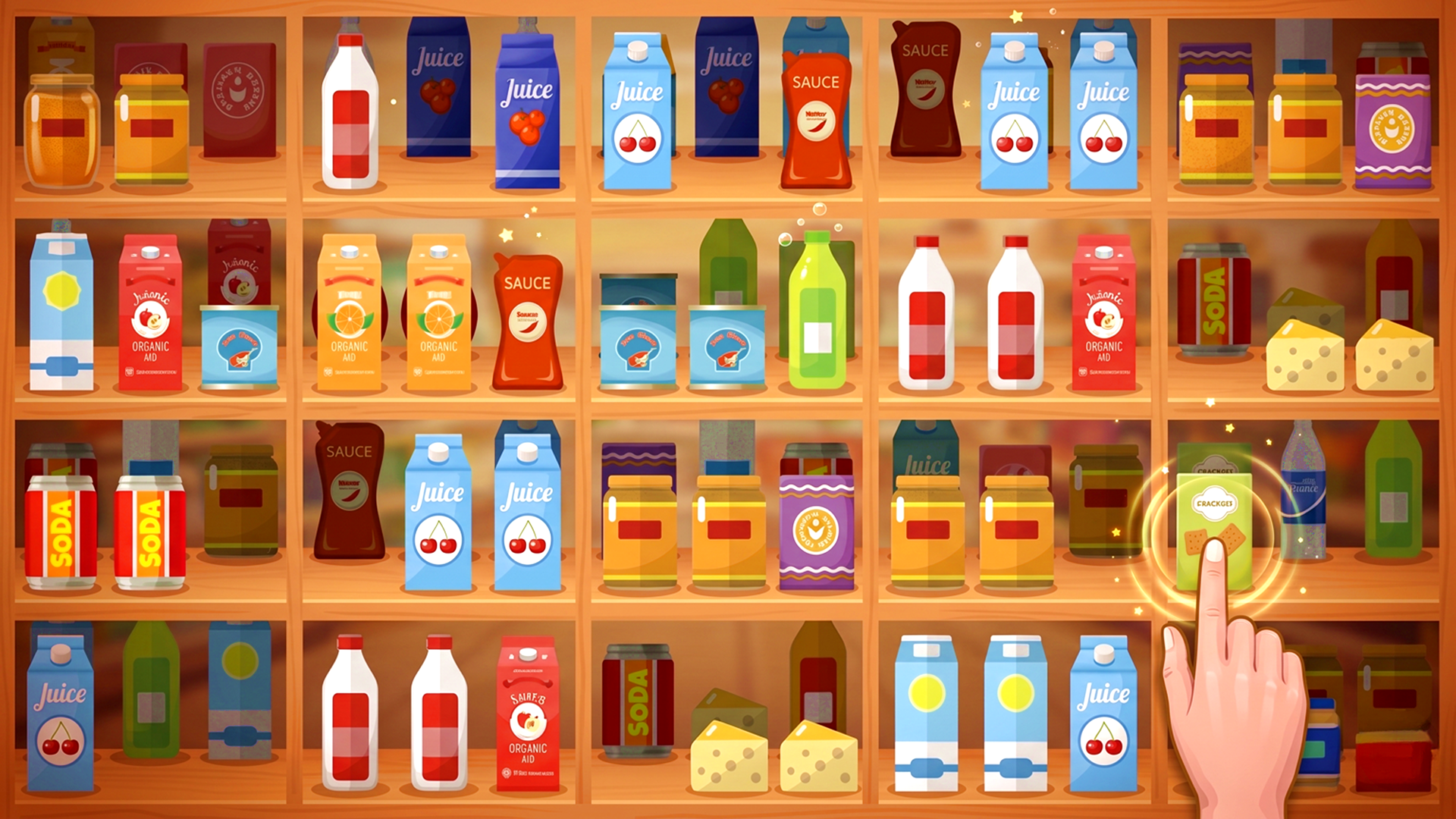
You start with a wooden shelf grid packed with random groceries. Scan for duplicates—say, three tomatoes scattered across different slots. Drag one tomato to a compartment. Then drag the other two into the same space. Boom. They vanish. The shelf breathes.
Clearing the Clutter
The real puzzle kicks in when shelves are dense. You might see milk cartons blocking cheese wedges. Move the milk first to free up the cheese. But wait—if you stack milk carelessly, you'll trap juice boxes. Every drag matters. Every choice creates ripples. It's a zen game of spatial foresight.
Unlocking New Levels
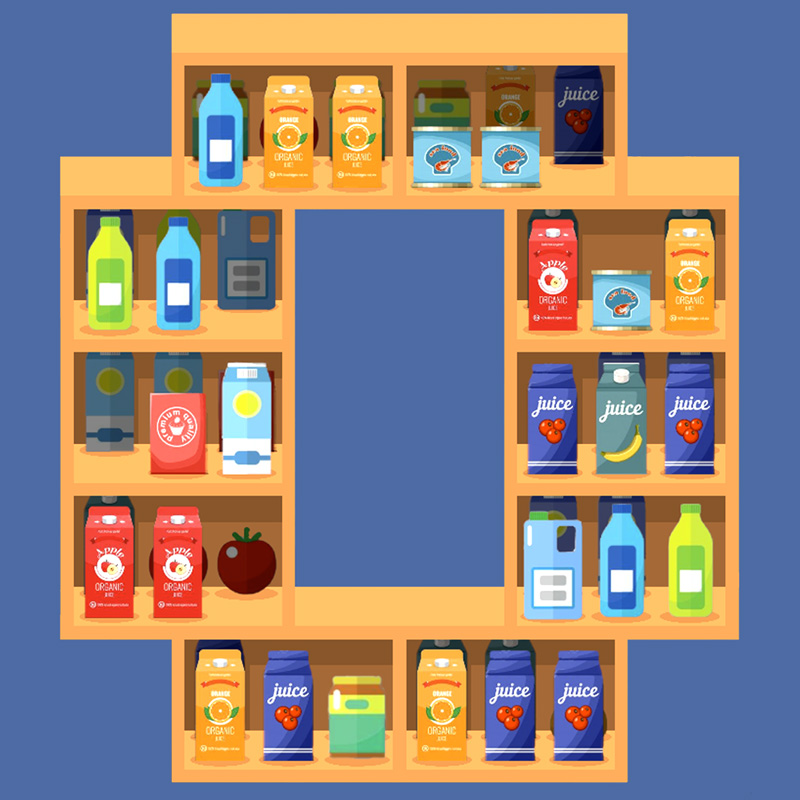
Remove all items on the shelves to beat a level. Early stages use simple H-shaped layouts with 8-12 items. Later? You're juggling 5x4 grids crammed with 20+ objects. The deeper you go, the more you discover: banana-juice boxes, wine bottles, canned goods. Completing levels unlocks fresh item sets—your reward for mastering the sort.
Who is Good Sort Master: Triple Match for?
Perfect for anyone who finds satisfaction in organizing drawers or lining up books by color. The 2-5 minute session length makes it ideal for coffee breaks, commutes, or winding down before bed. No timers. No pressure. Just you versus the mess.
The Gameplay Vibe
This is meditation disguised as a puzzle. The loop is hypnotic: spot, drag, match. Spot, drag, match. The minimalist visuals—flat colors, stock-adjacent grocery icons, a soft blue fabric background—aren't flashy, but that's the point. They keep your brain focused on the pattern, not the noise. The game runs at smooth framerates thanks to its lightweight Unity build, so there's zero lag between your swipe and the item's response. It's tactile. Crunchy. Satisfying.
Technical Check: Saves & Performance
1. Saves: Progress autosaves via browser cache—jump back into your current level instantly.
2. Performance: Runs flawlessly on low-spec devices thanks to simple 2D sprites and no physics engine overhead.
Quick Verdict
If you've ever felt weirdly satisfied stacking cans at the grocery store, Good Sort Master: Triple Match is your new obsession.
- The Hook: That triple-match "click" is pure dopamine—you'll chase it for hours.
- No-Stress Design: Minimalist graphics mean zero distractions, just you and the puzzle.
- Pro Tip: Always prioritize clearing corners first—trapped items are your worst enemy in later levels.
Release Date & Developer
Good Sort Master: Triple Match was developed by Sergey Tikhonov. Released in October 2024.