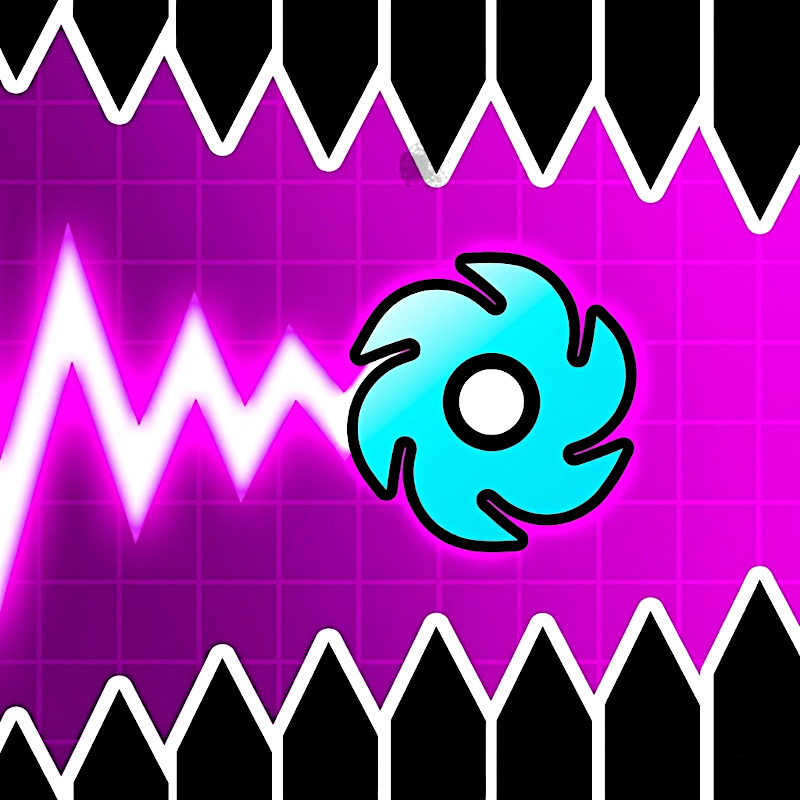
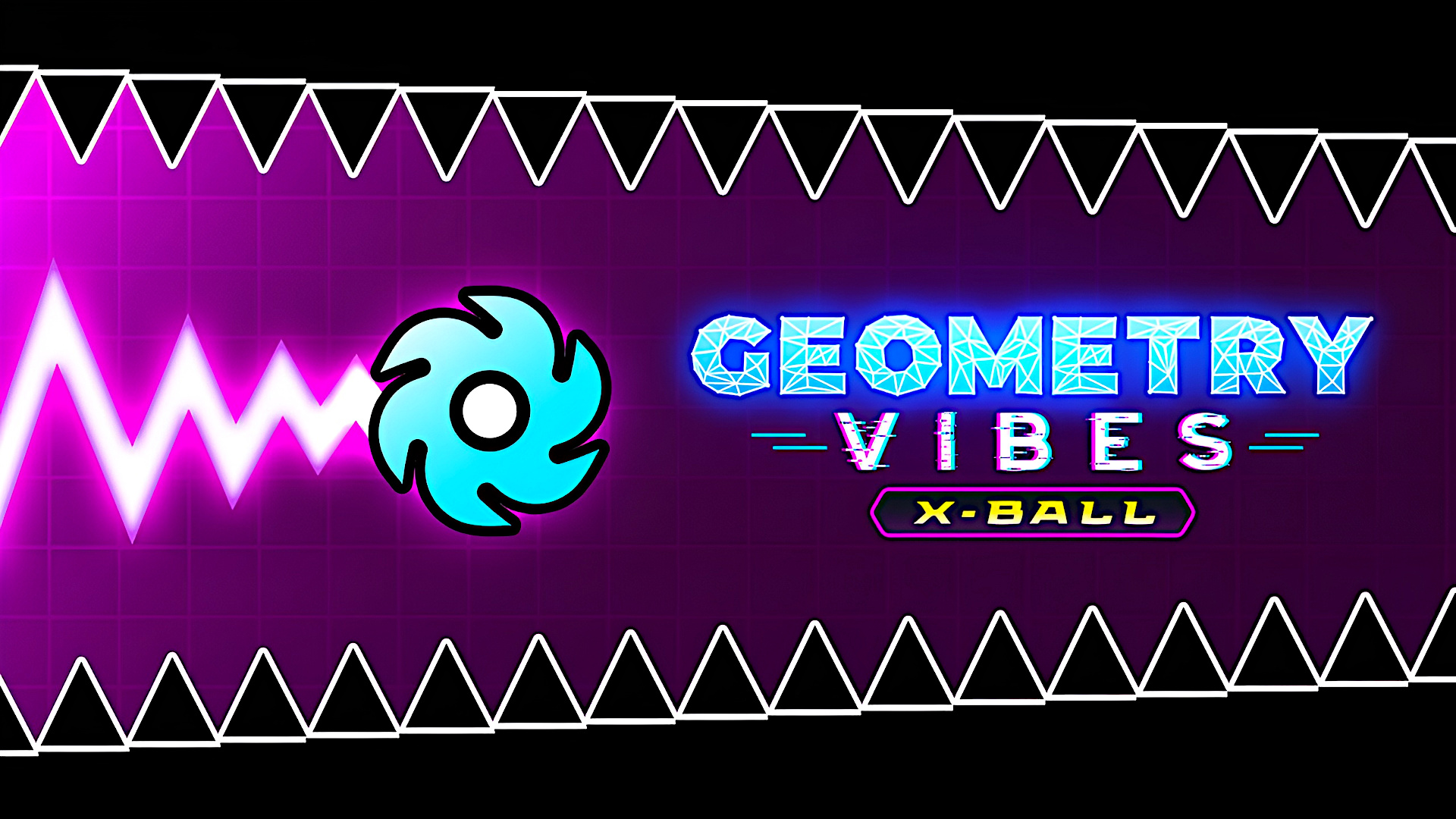
Hold down. Release. Crash. Repeat. Geometry Vibes X-Ball strips precision navigation down to a single input—your saw-blade avatar surges upward when you press, drops when you let go. Neon spikes line every corridor. One miscalculation ends your run. No checkpoints, no margin for error, just a progress bar crawling toward 100% while you weave through diamond hazards and rotating gears. Classic Mode delivers 10 levels that spike in difficulty around level 8. Endless Mode keeps scrolling until you hit a wall. Challenge Mode gates 5 master-tier stages behind raw skill. Race Mode throws up to four players into local split-screen chaos. Play it now on skill games at gameVgames—no downloads, instant browser action on any device.
Reach the portal without touching anything. Mouse left-click or spacebar sends your avatar up. Release and gravity pulls it down. That's the entire control scheme. Watch the progress bar at the top—it ticks from 0% to 100% as you advance through the level. Hit a spike, gear, or wall and you restart from 0%. Endless Mode removes the finish line; your goal is maximum distance before collision. Challenge Mode locks five ultra-tight stages that demand frame-perfect inputs. Race Mode assigns H, L, and up-arrow to players two through four so you can compete locally on the same keyboard.
Tap short bursts instead of holding for long climbs. Your avatar moves in sine-wave arcs—short taps create tight oscillations that thread narrow gaps. Long holds slam you into ceiling spikes. The movement trail behind your icon shows your last three positions; use it to predict collision zones. Diamond-shaped obstacles rotate slowly; time your ascent so you pass through the wide diagonal gaps, not the sharp points. Gears demand you hug one edge of the corridor—pick top or bottom and commit. Switching mid-gear guarantees a crash.
Classic Mode's first seven levels teach spacing and timing. Level 8 introduces layered hazards—spikes above, gears below, diamonds rotating in the middle. Level 9 cuts corridor width in half. Level 10 combines every obstacle type into a gauntlet that takes fifteen to twenty attempts. Finishing Classic unlocks Challenge Mode, where stage one starts at level-10 difficulty and ramps from there. Endless Mode has no progression gate—jump in anytime to chase high-distance leaderboards. Race Mode supports two to four local players; the first to reach the portal wins, but crashing resets you to the last checkpoint while rivals keep moving.
Count beats. Most corridors sync to a two-tap rhythm—press, release, press, release—that keeps you centered. Rotating diamonds appear every eight beats in Classic levels two through six; memorize their phase so you anticipate gaps. In Endless, obstacle density increases every 500 units; past 2000 units, safe zones vanish and you need frame-perfect taps. Challenge stages remove visual cues—the background stays pitch black, so you navigate by collision feedback and muscle memory. Practice the first thirty seconds of each Challenge level in isolation until you can clear it blind.
Perfect for arcade games fans who crave short-session challenges and rhythm-adjacent timing mechanics. If you enjoyed Geometry Vibes' endless wave survival, X-Ball expands that foundation with structured levels and local multiplayer. Geometry Arrow 2 players will recognize the minimalist portal-chasing format but find X-Ball's oscillation mechanic more forgiving than pure cave flight. Local co-op enthusiasts get immediate value from Race Mode's four-player split-screen on a single keyboard. Moto X3M veterans transition smoothly—both games reward memorization, rapid restarts, and incremental progress through obstacle gauntlets.
Geometry Vibes X-Ball was developed by gameVgames. The studio expanded the original Geometry Vibes concept by adding 10 structured Classic levels, five Challenge stages, and local multiplayer Race Mode while keeping the core one-button oscillation mechanic intact for instant browser play.
The first seven Classic levels teach core timing in under ten attempts each. Level 8 introduces overlapping hazards that demand rhythm memorization. Levels 9 and 10 require fifteen to twenty restarts as corridor width shrinks and obstacle density spikes. Challenge Mode stages one through five gate the hardest content—expect fifty-plus attempts per stage to build the muscle memory needed for frame-perfect inputs.
Yes. Tap the screen to ascend, release to descend. The Unity WebGL build runs smoothly on tablets and phones without install. Touch controls mirror the desktop experience—one input toggles movement direction, making it ideal for portrait-mode sessions on iOS and Android browsers.
Two to four players share one keyboard. Player one uses mouse or spacebar, player two taps H, player three presses L, player four hits up-arrow. Each controls their own saw-blade avatar racing through the same level simultaneously. Crashing resets your position to the last checkpoint while opponents continue forward. First player to reach the portal wins the round.
Classic Mode presents 10 fixed levels with defined start and end portals—you chase 100% completion on the progress bar. Endless Mode removes the finish line and scrolls infinitely; obstacle density increases every 500 units and your goal is maximum distance before collision. Classic rewards memorization, Endless tests raw reaction speed under escalating pressure.
Challenge Mode unlocks after finishing all 10 Classic levels. The five Challenge stages start at level-10 difficulty and scale upward—tighter corridors, faster rotations, and zero visual cues in later stages. Endless and Race modes have no progression gate; you can access them immediately from the main menu.