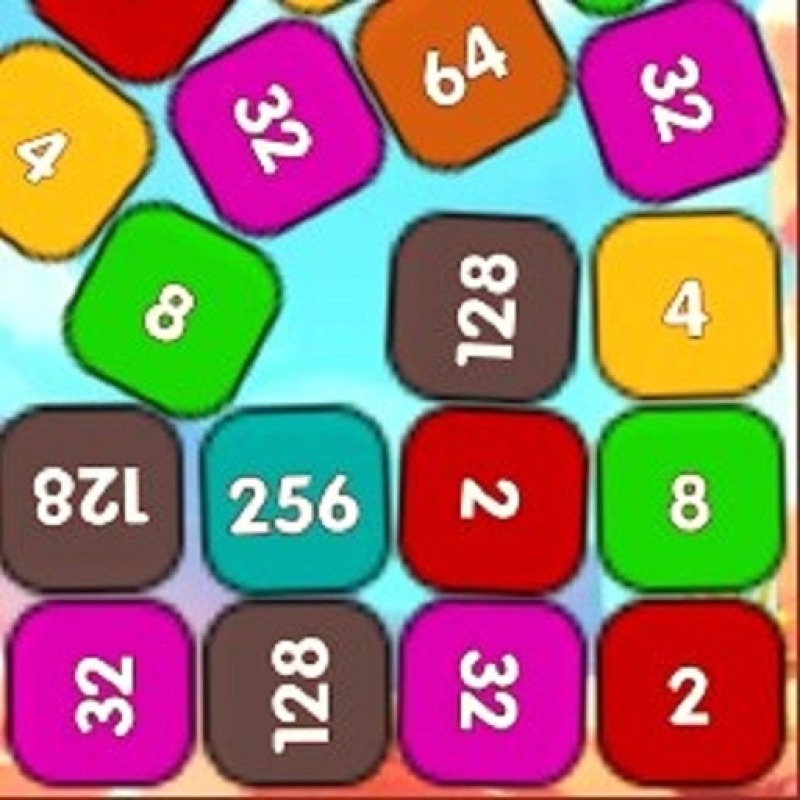
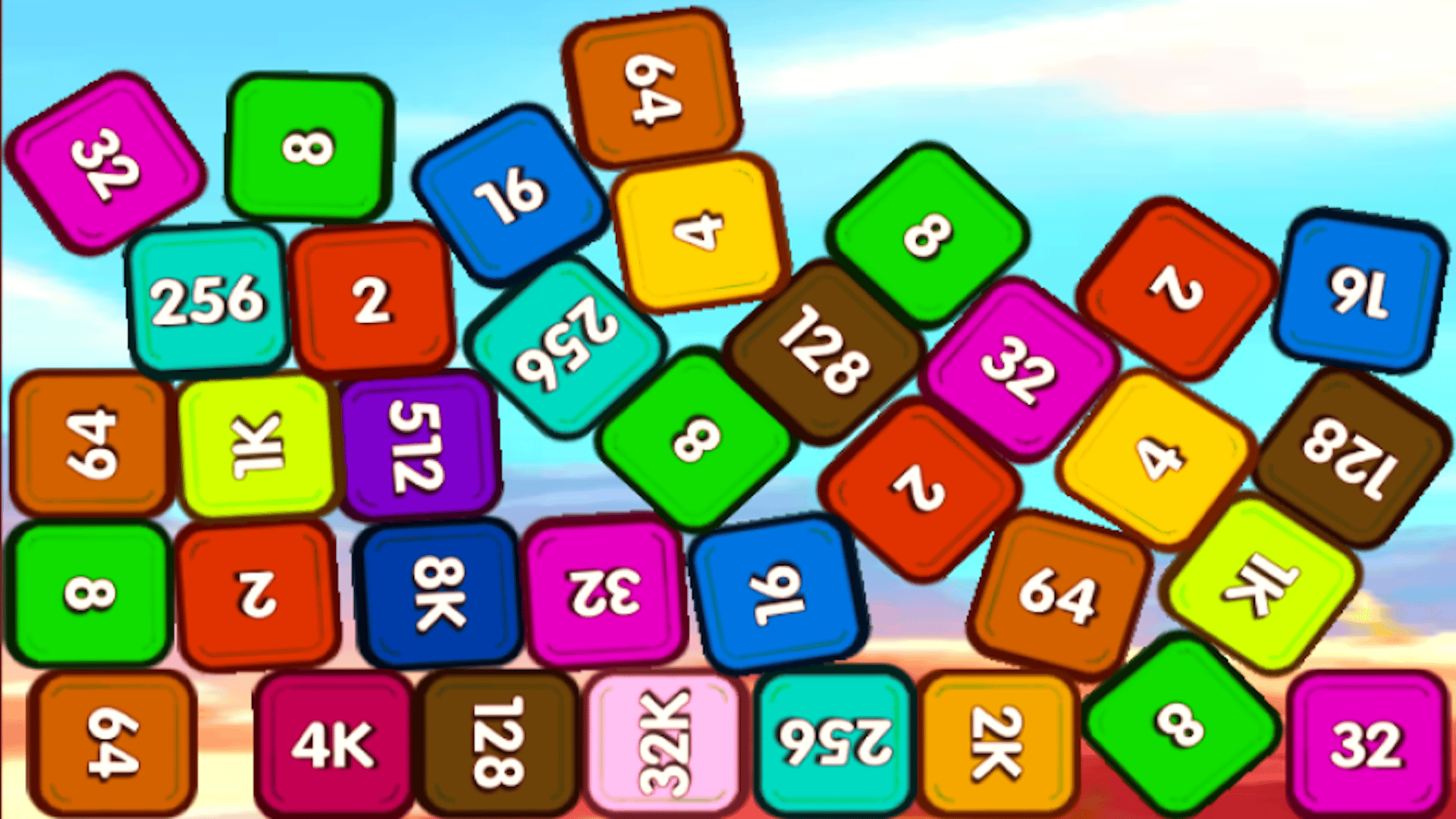
About Funny Cubes 2048
Funny Cubes 2048 puts an entertaining spin on the classic 2048 formula by bringing playful physics into the mix. The core activity is merging numbered cubes — throw matching cubes together, watch their face values double, and push for the highest cube value possible. The game includes boosters and a global achievement system, and it runs free online across devices.
How to Play Funny Cubes 2048
The goal is to collect the largest cube possible by combining cubes of matching face values. Throw a cube onto another cube that shares its face value and the two merge into a single cube worth double — a 2 landing on a 2 produces a 4, for example. Cubes with different face values do not merge; they simply stack up and begin to fill the container. As unmatched cubes accumulate, the container overflows, which complicates the game and can lead to a loss.
Boosters are available to help clear out a pile of unmerged cubes. Earning them requires collecting several cubes at once, so chaining merges together is the way to build up that resource.
Games You Might Like
If the merge-and-stack challenge of Funny Cubes 2048 appeals to you, the broader matching games category on Playgama is packed with similar brain-testing titles, and the dedicated 2048 games series collects every doubling-value variant in one place. For a fruit-themed take on the same drop-and-merge mechanic, Fruit Merge: Juicy Drop Game challenges you to keep cascading combinations from spilling out of the container. Number Match swaps cubes for a number grid where clearing pairs of matching values or pairs that sum to ten drives your score upward. Block-stacking fans will find Block Blast Master rewarding, since every move demands the same kind of strategic thinking needed to rack up a high score here.
Browse the full puzzle games section for more logic-driven challenges, or check out arcade games when you want fast-paced score-chasing action.