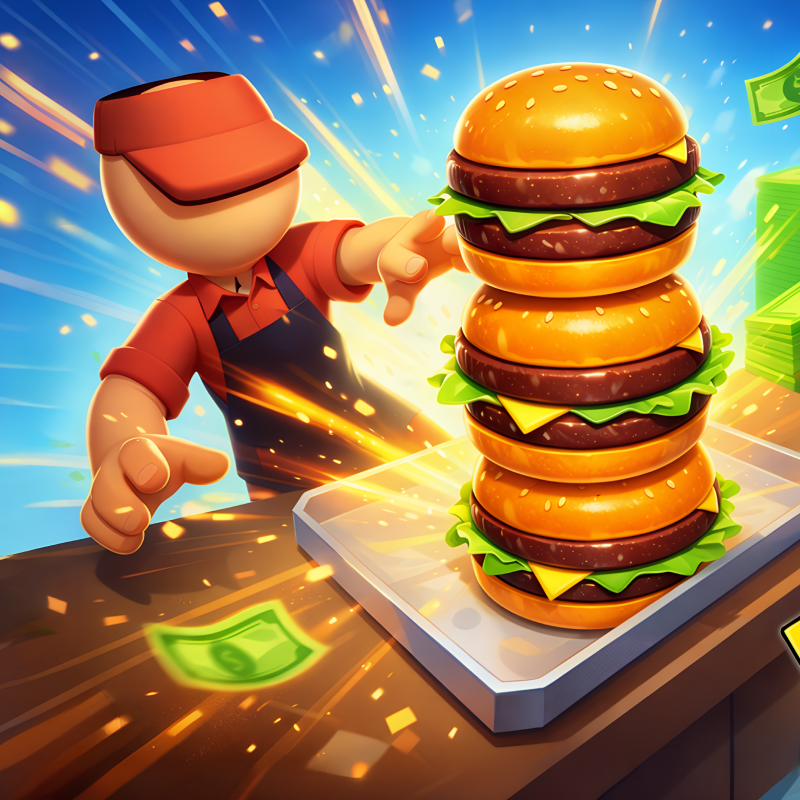
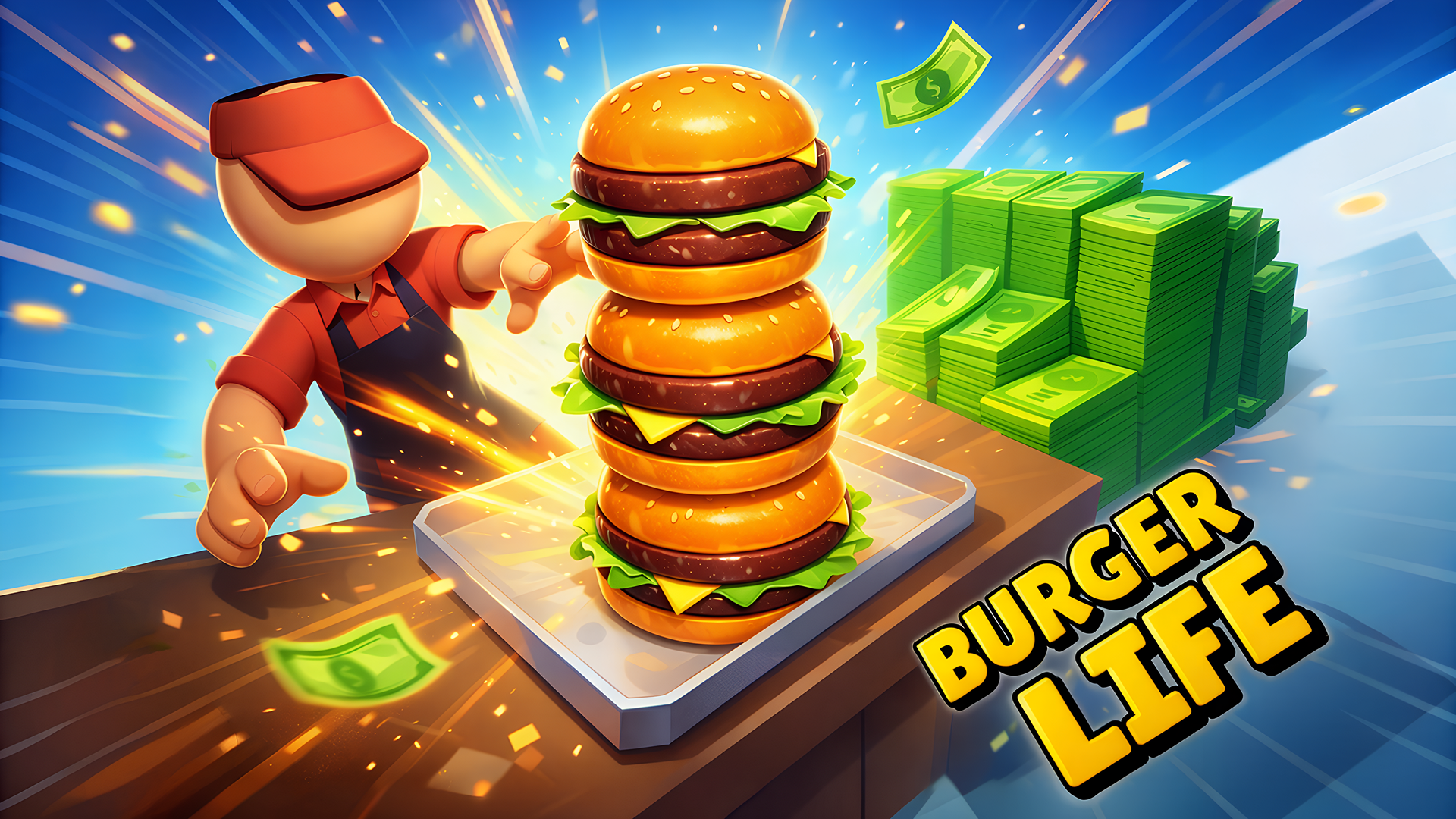
Ever wanted to run a burger joint without the risk of actual bankruptcy? Burger Life throws you straight into the grind of restaurant management—grab burgers, serve hungry customers, collect cash piles off the floor, and slowly build your empire one upgrade at a time. This is pure resource management wrapped in that hyper-casual mobile wrapper we've all seen a hundred times. If you've played any "idle tycoon" game, you know the drill: run around, automate, expand, repeat.
The learning curve is nonexistent, but keeping up with demand? That's the real challenge.
You start by running to the burger station, grabbing a stack of burgers (and I mean a comically tall stack), then delivering them to waiting customers. Use WASD or arrow keys on desktop, or swipe on mobile to move your character around. The controls are basic but they work—your character auto-picks up items when you walk over them.
Here's where it gets hectic. Customers queue up fast, and if you don't have enough seats or service points, you'll see "NO SEAT!" bubbles pop up over frustrated customers. You're constantly juggling between serving, collecting the mountains of cash scattered on the floor, and standing on upgrade zones to spend that money. The game intentionally creates these pressure points to push you toward automation.
Once you've collected enough cash, hire employees to handle the grunt work. They'll grab burgers and serve customers while you focus on unlocking new sections of the restaurant. Red circles on the ground indicate expansion zones—stand there, spend your cash, and boom, more space. The endgame is maxing out your restaurant size and hitting all the task checkmarks.
This is aimed squarely at casual mobile gamers who want something mindless to tap through during a commute or lunch break. If you're looking for deep strategy or innovation, keep walking. But if you want a low-stakes time-killer where you can turn your brain off and watch numbers go up, this hits that dopamine button just right. Safe for all ages—no violence, no complex mechanics.
Honestly? It's extremely chill until it's not. The early game is peaceful—you're just walking around, picking stuff up, watching your little empire grow. But once the customer flow ramps up, it becomes this frantic loop of collecting cash, upgrading, and preventing bottlenecks. The visuals are bare-bones: flat-shaded 3D models, isometric view, zero visual flair. Think bottom-tier Unity mobile game aesthetic. There's no music to speak of in my playthrough, just basic sound effects when you pick up money or complete a task. It's functional, not memorable.
The game auto-saves your progress in the browser cache, so you won't lose your restaurant unless you clear your browsing data. Performance-wise, this will run on a potato—the graphics are so simple that even old phones should handle it without lag. I didn't experience any stuttering or crashes on desktop, and the mobile version felt equally smooth.
A competent clone that delivers exactly what the genre promises—nothing more, nothing less.
Responsive enough for the task. No complaints, but nothing to write home about either.
Developed by GMR Bros. and released on January 12, 2026. It's a fresh release, but the formula is ancient.