Block Sudoku - Play Online
Block Sudoku is a grid-based logic puzzle that smashes together Tetris-style block placement and classic Sudoku rules. Instead of filling rows with random pieces, you're color-matching numbered blocks onto a segmented board where every placement counts. Think Woodoku meets number theory—casual enough for your coffee break, deep enough to keep your brain humming.
Key Features
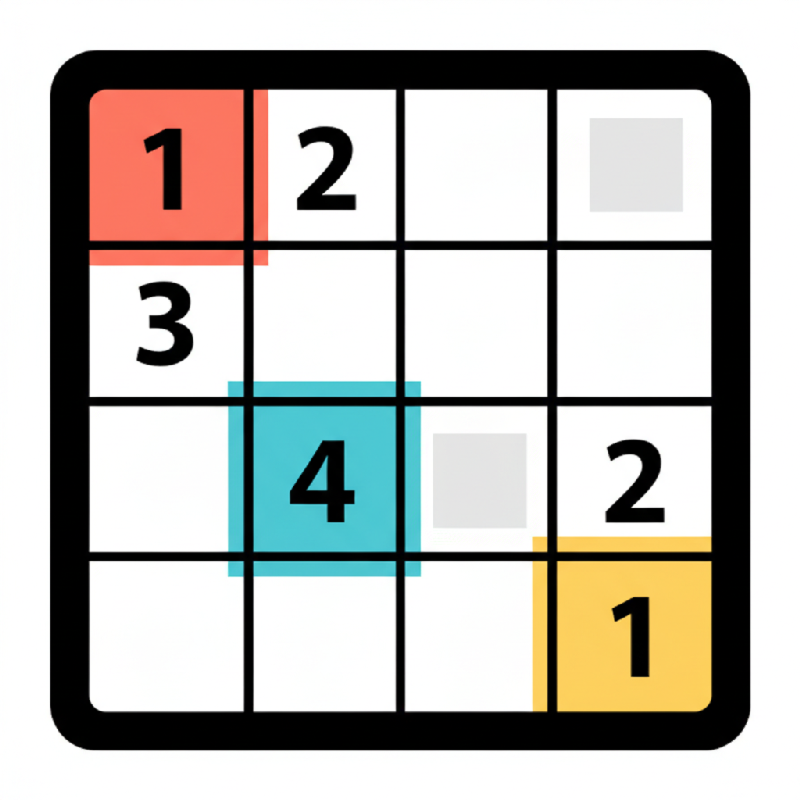
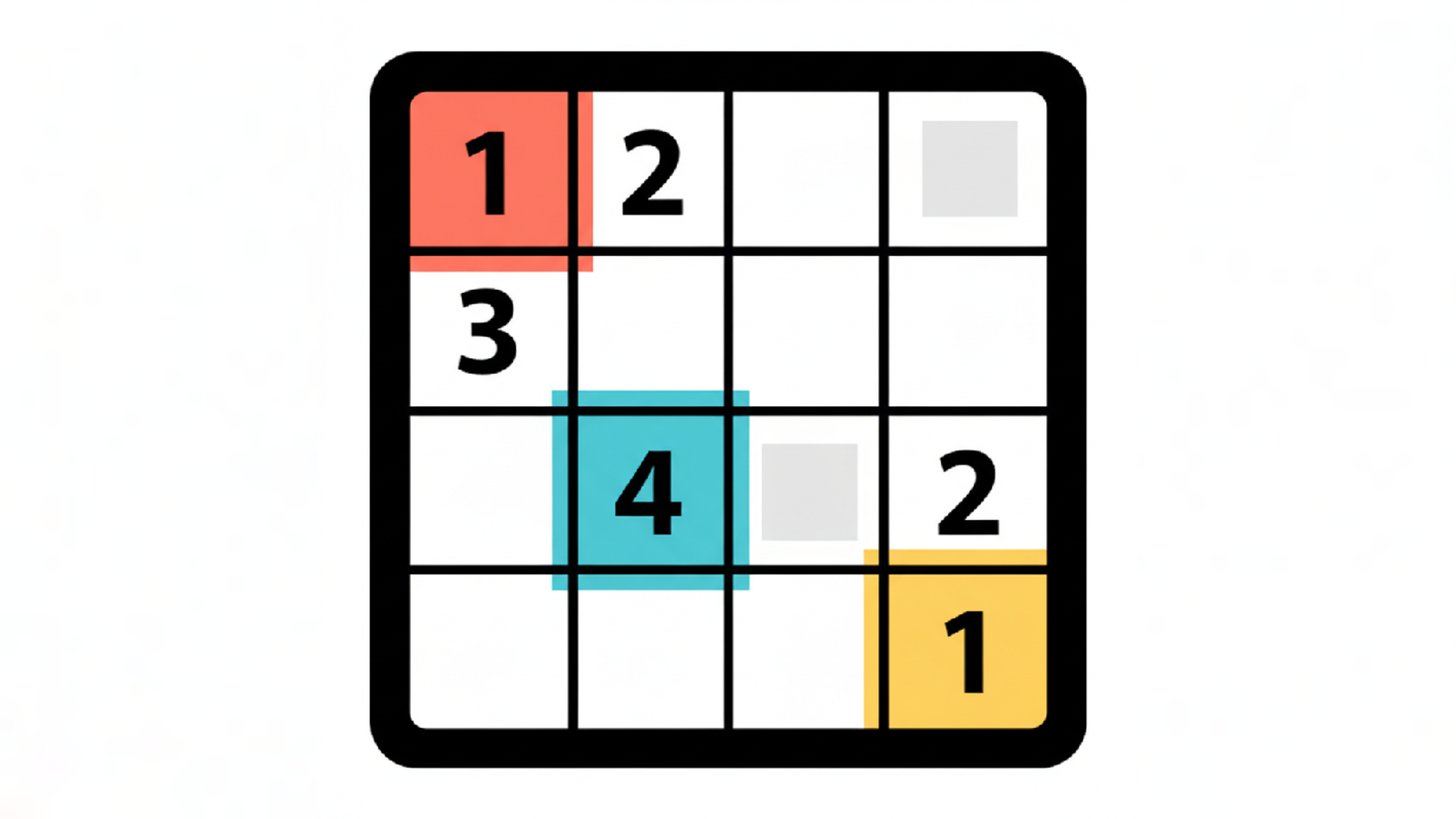
- Dual-Layer Logic: Place polyomino blocks while respecting Sudoku rules—no duplicate numbers in any continuous row or column segment.
- Color-Coded Zones: Each block has a designated color area. Blue pieces only fit blue zones, red pieces stick to red zones—spatial planning meets color theory.
- Hint Challenges: Yellow-circled cells demand unique numbers, and number hints show exact digits. Solve these for brain-tickling bonus puzzles.
- Clean Grid Design: Flat vector shapes and high-contrast colors keep the focus sharp. No visual clutter—just you, the grid, and 4 hint tokens to burn wisely.
How to Play Block Sudoku
Easy to grasp in 30 seconds. Hard to quit once you nail the rhythm.
Controls
Responsive on every device. No lag, no fumbling.
- Desktop: Click and drag blocks from the bottom tray onto the grid. Release to drop.
- Mobile: Tap a block, drag to position, and watch it snap into place when close enough.
Building Your Grid
Start by scanning the bottom tray. You've got 3-4 polyomino shapes, each stamped with a number and color. Drag a piece to the grid—it'll only lock into matching colored zones. Obstacles (black squares) divide the board into segments, so a "row" isn't always a full line. Your job? Fit every block without repeating numbers in any unbroken stretch.
Cracking the Sudoku Layer
Here's where it gets spicy. Yellow circles mark cells that must contain different numbers from their neighbors. Number hints drop exact digits you need to place. Ignore these, and you'll brick the puzzle. Respect them, and the grid clicks together like a satisfying lock.
Hint Economy & Mastery
You start with 4 hint tokens (lightbulb icon, top-right). Stuck? Burn one to reveal a valid move. Run dry? The game nudges you toward ads or a store for refills—treat hints like a last resort. True mastery means clearing grids without touching that button. As stages progress, grids expand and hint challenges multiply. The difficulty curve is smooth but relentless.
Who is Block Sudoku for?
This is for puzzle junkies who crave logic over luck and commuters hunting 5-minute brain workouts. If you've burned through Sudoku apps and miss the spatial kick of Tetris, this hybrid delivers both. Perfect for breaks—each stage wraps in under 10 minutes, but the "one more puzzle" pull is real.
The Gameplay Vibe
It's Zen with a math edge. The snap-to-grid feedback is buttery smooth, and watching a packed board resolve into perfect Sudoku harmony hits the same dopamine note as clearing four lines in Tetris. The minimalist visuals aren't flashy—think utilitarian over artistic—but that's the point. Zero distractions means you stay locked in the flow state. The game runs at a crisp framerate even on budget browsers, thanks to lightweight vector rendering.
Technical Check: Saves & Performance
1. Saves: Progress auto-saves via browser cache. Close the tab mid-puzzle, and you'll resume exactly where you left off.
2. Performance: Powered by a web-based engine (likely Phaser or Godot export). Instant load times, no install bloat, and 60 FPS even on older phones.
Quick Verdict
A smart remix of two classic puzzle formats that respects your time and IQ.
- The Hook: Color-coded Sudoku with polyomino blocks—familiar rules, fresh friction.
- The Challenge: Hint puzzles force you to think three moves ahead. Yellow circles are your nemesis.
- Pro Tip: Always scan for number hints first. Lock those in, and the rest of the board opens up.
- The Grind: Hint tokens are scarce. Budget them like rare ammo—or embrace the ad shortcut for free refills.
Release Date & Developer
Block Sudoku was developed by sublevelgames. Released in February 2026.